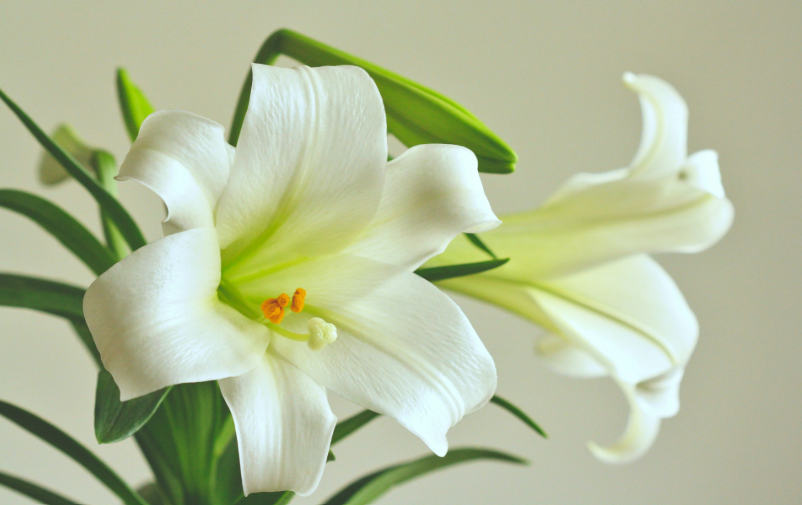
Lilium is a genus of about 100 species of bulbous, herbaceous perennials native to Europe, North America and Asia south [Source: University of Missouri]. Lilies usually feature 6-tepaled flowers in a variety of shapes (trumpet, funnel, cup, bell, bowl or flat), sometimes nodding, sometimes with reflexed petals.
White lilies are among the most enduring symbols of elegance in the garden, prized for their large, trumpet or star-shaped blooms and their ability to anchor a border, bouquet, or ceremony with a single striking color. Most true lilies grow from bulbs planted 6 to 8 inches deep, sending up a single upright stem that can range anywhere from 18 inches to over 6 feet tall depending on the type, with individual flowers measuring 3 to 9 inches across. Lilies have been cultivated for at least 4,000 years, with the earliest known depictions of a pure white lily appearing in artifacts from ancient Crete, and today there are more than 2,000 recognized lily varieties, with hundreds more hybrids released each decade.
White lily types are generally sorted into a handful of horticultural divisions, including Asiatic, Trumpet, Oriental, and the newer LA and LO hybrid groups, each with distinct bloom shapes, fragrance levels, and bloom times. Asiatic types tend to be the earliest to flower, often opening in late spring to early summer and reaching only 18 to 24 inches tall, while Trumpet and Oriental types bloom later, from midsummer into early fall, and can tower to 5 or 6 feet with individual stems carrying 6 to 12 blooms. Fragrance also varies considerably by division, with Oriental and Trumpet types producing some of the most powerful, room-filling scents in the plant world, while Asiatic hybrids are typically bred to be lightly scented or entirely unscented.
Bulb longevity is one of the more appealing traits of white lilies, since a single healthy bulb can remain in the ground and rebloom for 3 to 5 years or more before it needs dividing, often multiplying into a small cluster of bulbs that produces an increasing number of stems each season. Most types are hardy across USDA zones 4 through 8, tolerating winter temperatures well below freezing as long as the bulb is planted at the correct depth and the soil drains well. As cut flowers, white lilies are exceptionally long-lasting, typically holding their form and color in a vase for 7 to 14 days, which has made them a mainstay of the global cut flower trade for well over a century.
Beyond their ornamental value, white lilies carry deep symbolic weight across cultures, generally representing purity, virtue, and new beginnings, which explains their prominence in weddings, religious ceremonies, and memorial arrangements alike. Major commercial production of white lily bulbs is concentrated in a handful of regions, including the Pacific Northwest of the United States, the Netherlands, and Japan, with a single growing region sometimes producing tens of millions of bulbs annually to meet seasonal demand. Whether grown in a perennial border, forced into early bloom for a holiday display, or cut for a bouquet, white lilies remain one of the most reliably dramatic flowering bulbs available to home gardeners.
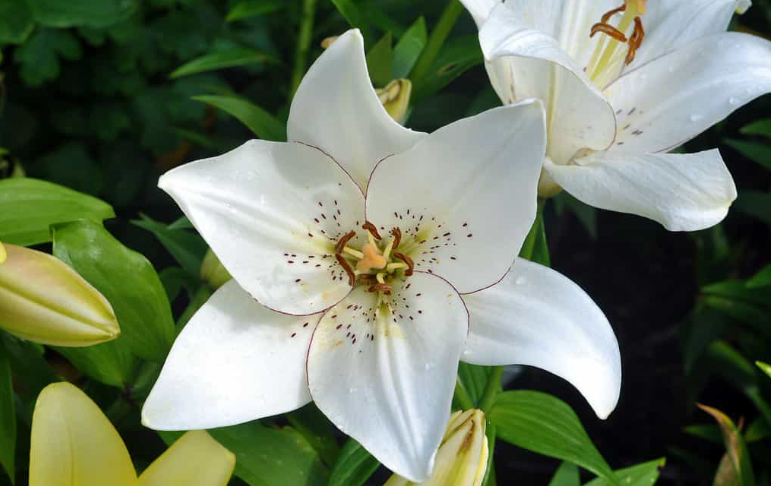
List of White Lilies
Casablanca Lily
Casablanca is widely regarded as the finest white Oriental lily ever bred, producing large, outward-facing, bowl-shaped blooms that can reach 8 to 9 inches across with gracefully recurved petals and contrasting red-orange anthers. A single stem typically carries 6 to 8 blossoms and reaches 3 to 4 feet in height, filling an entire garden or room with a heavy, sweet fragrance when in bloom. It flowers for up to 4 weeks in mid to late summer, won the Royal Horticultural Society’s Award of Garden Merit in 1993, and is considered one of the top choices for both perennial borders and cut flower arrangements.
Easter Lily
Easter Lily is the classic pure white, trumpet-shaped lily most associated with spring holidays, though its natural bloom time is actually midsummer and commercial growers force the bulbs to flower earlier for the season. Plants typically reach 2 to 3 feet tall with several large, outward-facing, fragrant flowers per stem, each trumpet measuring 6 to 7 inches long. Native to islands in southern Japan, Easter Lily is grown commercially on a massive scale, with a small stretch of the California-Oregon border producing the majority of the bulbs sold in North America each year, and it performs best in USDA zones 5 through 9.
White American Lily
White American Lily is a hardy, fast-growing trumpet-type cultivar closely related to the Easter Lily, reaching 3 to 4 feet tall with bold white blooms that are sometimes tipped in a faint green blush. Its dark green, lance-shaped leaves provide a sturdy backdrop to the flowers, which open in summer and thrive in full sun to partial shade across USDA zones 4 through 8. This type is valued for its vigor and reliability, often outperforming other trumpet types in cooler climates.
Nellie White Lily
Nellie White is one of the most widely grown commercial cultivars of the Easter Lily group, prized for its uniform, pure white trumpets and its reliability when forced for early bloom. Plants reach 2 to 3 feet tall and typically produce 4 to 6 fragrant flowers per stem, each with the classic outward-facing trumpet shape. Because of its dependable performance under greenhouse conditions, Nellie White accounts for a large share of the potted Easter lilies sold in North America each spring.
White Heaven Lily
White Heaven is a trumpet-type cultivar known for its huge, pure white flowers centered with a soft yellow heart, typically producing 3 to 6 blooms per stem on plants reaching 2 to 3 feet tall. It flowers from April through June, thrives in full sun to partial shade, and offers a heady, sweet fragrance that carries well beyond the immediate planting. White Heaven is not reliably winter hardy in colder regions, so it is often grown in containers that can be moved indoors before frost.
Eyeliner Lily
Eyeliner is a distinctive Easter and Asiatic hybrid recognized instantly for its milk-white petals rimmed in bold purple-black edging near the flower’s center, a striking departure from the uniform white of most other types. It reaches up to 3 feet tall with semi-upward-facing blooms about 4 to 5 inches across, and it needs bright, full sun and well-draining soil to perform its best. The dramatic contrast between the white petals and dark lining has made this an increasingly popular choice in modern floral design.
Ace Lily
Ace is a compact trumpet-type cultivar bred for reliability and early flowering, typically staying under 3 feet tall with clean white, moderately fragrant blooms. It is a popular commercial cultivar in the Longiflorum group alongside Nellie White and White American, chosen for its consistent bulb size and predictable forcing schedule. Ace performs well in containers as well as garden beds across USDA zones 4 through 8.
Regale Lily
Regale, also known as the Regal Lily, is a fragrant trumpet species native to China, producing bold white blooms with a vivid yellow throat and petals that are often flushed with purple-pink on the reverse side. Plants can reach 4 to 6 feet tall and typically produce 10 to 12 trumpet-shaped flowers per stem, each 5 to 6 inches long, opening in midsummer. Regale is considered one of the easier trumpet species to grow from seed, though it can take up to 3 years to reach flowering size.
Regale Album Lily
Regale Album is a pure white selection of the Regale species, lacking the purplish flush found on the petal reverse of the standard form and offering an entirely clean, white presentation instead. It reaches a similar height of 5 to 6 feet, with sturdy stems capable of producing multiple 5 to 6 inch trumpets that curve gracefully backward to reveal a yellow throat and prominent orange anthers. This type is especially valued in white-themed or moon gardens designed to glow in evening light.
Madonna Lily
Madonna Lily is one of the oldest cultivated lilies in the world, with a documented history stretching back roughly 4,000 years and deep roots in Mediterranean religious art and symbolism. It produces outward-facing, trumpet-shaped white blooms in clusters of up to 20 per stem, on plants reaching 3 to 4 feet tall, with a sweet fragrance that has made it a traditional favorite for weddings and spiritual ceremonies. Unlike most lilies, Madonna Lily bulbs are shallow-rooted and are typically planted only 1 inch deep, and they bloom from late spring into early summer.
June Fragrance Lily
June Fragrance is an early-blooming hybrid within the Madonna Lily division, created by crossing two closely related species to produce creamy-white flowers with an intensely sweet scent. It reaches up to 4 feet tall and flowers in late spring, several weeks ahead of most other white lily types, making it a valuable early-season addition to a fragrant border. This cultivar has also been used as a parent plant in the development of several newer hybrids within the same division.
Moonlight Madonna Lily
Moonlight Madonna is another notable cultivar in the small Madonna Lily division, valued for its luminous, pale flowers that seem to glow at dusk, an effect that gives the cultivar its name. It shares the shallow planting requirements and 3 to 4 foot height typical of the division, flowering in late spring with the same rich, sweet fragrance associated with its parent species. Because this division includes very few commercially cultivated types, Moonlight Madonna remains a specialty choice sought out by dedicated lily collectors.
Formosa Lily
Formosa Lily is a tall, exotic species closely related to the Easter Lily, native to Taiwan and named for the Portuguese word for “beautiful.” It produces large, trumpet-shaped white blooms with a light, alluring fragrance on stems that can reach 4 to 6 feet, flowering from mid to late summer. Formosa Lily is known for its ability to brighten a garden or indoor space with its pristine, elongated flowers, and it tends to self-seed readily in favorable conditions.
Goldband Lily
Goldband Lily, sometimes called the Golden Rayed Lily, is a striking species native to Japan that combines a predominantly white flower with a bold golden-yellow stripe running down the center of each petal. Blooms can reach 8 to 10 inches across, among the largest of any lily type, held on stems that grow 3 to 5 feet tall and flower in mid to late summer. This type prefers acidic, well-draining soil and is often grown in containers where soil conditions can be more carefully controlled.
Navona Lily
Navona is a popular Asiatic hybrid valued for its clean white, upward-facing blooms and its excellent vase life, making it a favorite among commercial cut flower growers. It stays relatively short at 18 to 24 inches tall, flowers in early summer ahead of most Oriental and Trumpet types, and carries little to no fragrance, which makes it a practical choice for indoor arrangements in scent-sensitive settings. Its sturdy, upright stems typically hold 4 to 6 blooms each.
Litouwen Lily
Litouwen is an Asiatic hybrid prized for its pure white, star-shaped flowers and compact, reliable growth habit, typically reaching 20 to 28 inches tall. Like other Asiatic types, it blooms early in the season, generally in late spring to early summer, and produces little fragrance, making it a popular choice for gardeners who want lily color without a heavy scent. Its sturdy stems make it a dependable performer in both borders and cutting gardens.
White Pixel Lily
White Pixel is a dwarf Asiatic cultivar bred specifically for container growing, staying under 16 inches tall while still producing the same bright white, upward-facing blooms typical of the division. Its compact size and early summer bloom time make it especially useful for patios, window boxes, and small garden spaces where taller lily types would be impractical. Like most Asiatic types, it is unscented and extremely low maintenance.
Tresor Lily
Tresor is an LA hybrid, the result of crossing the Easter Lily with Asiatic parents, combining the large flower size of Trumpet types with the vigor and color range of Asiatics. It produces broad, flat-faced white blooms measuring 5 to 7 inches across on stems reaching 3 to 4 feet, with only a light fragrance. Tresor flowers in early to midsummer, bridging the gap between the early Asiatic bloom season and the later Oriental season.
Zeus Lily
Zeus is another LA hybrid cultivar, known for its large, pure white, outward-facing flowers and notably strong, thick stems that resist bending even in wind or rain. It typically reaches 3 to 4 feet tall, with individual blooms measuring up to 6 inches across, and flowers for several weeks in early summer. Zeus is frequently chosen by commercial growers for its long, straight stems, which are well suited to the cut flower trade.
Muscadet Lily
Muscadet is an Oriental hybrid with white petals delicately speckled with pink or crimson freckles concentrated toward the center, giving it a softer, more painterly look than the pure white of Casablanca. It reaches 3 to 4 feet tall, produces a strong, sweet fragrance, and flowers in mid to late summer with 4 to 8 blooms per stem. Muscadet is a popular choice for gardeners who want the drama of an Oriental lily with a bit more visual texture than a solid white bloom offers.
Purissima Lily
Purissima is a Trumpet and Aurelian division cultivar valued for its exceptionally pure, unblemished white blooms and strong, upright growth habit. It typically reaches 4 to 5 feet tall, with each stem producing 6 to 10 large, fragrant trumpets that open in midsummer. The name, derived from the word for “purest,” reflects the cultivar’s reputation as one of the whitest-flowered trumpet lilies available.
Snow Queen Lily
Snow Queen is a tall, elegant white cultivar known for its clean, unmarked petals and vigorous growth, typically reaching 3 to 5 feet depending on growing conditions. It produces a moderate to strong fragrance and flowers in the height of summer, with each stem capable of carrying 6 or more blooms. Snow Queen is often planted toward the back of a perennial border, where its height allows it to stand above shorter summer-flowering companions.
White Elegance Lily
White Elegance is an Asiatic cultivar bred for its refined, pure white, upward-facing blooms and compact, tidy growth habit, generally staying between 24 and 30 inches tall. It flowers in early summer, slightly ahead of most Oriental and Trumpet types, and like other Asiatics it produces little to no fragrance. Its clean color and manageable size make it a popular choice for formal garden beds and mixed containers.
Alaska Lily
Alaska is a hardy Trumpet-type cultivar developed for improved cold tolerance, allowing it to perform reliably in cooler climates where some other Trumpet types struggle. It reaches 3 to 4 feet tall, produces large, fragrant white blooms with a hint of yellow at the throat, and flowers in midsummer. Alaska’s improved hardiness has made it a favorite among gardeners in the upper Midwest and other regions with harsher winters.
Lady Alice Lily
Lady Alice, sometimes called a Turk’s Cap type for its strongly recurved petals, produces creamy white, down-facing blooms accented with a gold star at the center and light apricot-orange speckling. It reaches about 4 feet tall, tolerates hot summer conditions better than many other white types as long as its bulb stays cool underground, and its long-lasting flowers and buds continue to open even after cutting. This makes Lady Alice a favorite for florists seeking extended vase life.
White Tiger Lily
White Tiger Lily is a rare, naturally occurring white-flowered form of the classic spotted Tiger Lily, retaining the same strongly recurved petal shape while lacking the bold orange coloring of the standard type. It grows 3 to 4 feet tall, produces shiny black bulblets along its stem that can be used to propagate new plants, and is among the hardiest lily types available, tolerating USDA zones as cold as zone 3. It flowers in late summer and has an old-fashioned charm well suited to naturalized plantings.
White Wood Lily
White Wood Lily is an uncommon white-flowered form of a North American native species typically seen in shades of orange and red, making this pale variant a special find for wildflower gardeners. It grows 1 to 2 feet tall with upward-facing, cup-shaped blooms and is best suited to naturalized woodland edges and native plant gardens rather than formal beds. Because it is far less common than its colored counterpart, it is rarely available commercially and is more often found through specialty native plant nurseries.
Bermuda Lily
Bermuda Lily is a historic name for a strain of the Easter Lily that was extensively cultivated on the island of Bermuda beginning in the 19th century before disease outbreaks shifted the bulk of commercial production to the Pacific coast of the United States. It shares the same large, fragrant, trumpet-shaped white blooms and 2 to 3 foot height typical of the Easter Lily group. The name is still used today by some growers and florists to refer to classic Longiflorum-type white lilies regardless of where the bulbs were actually grown.
Christmas Lily
Christmas Lily refers to Easter Lily bulbs that have been forced to bloom for the December holiday season rather than in spring, a practice especially common in the Southern Hemisphere where the natural flowering season aligns more closely with early summer. The plant itself is identical to the standard Easter Lily, reaching 2 to 3 feet tall with large, fragrant white trumpets, but the forcing schedule shifts its commercial availability by several months. This flexible forcing ability is part of what has made Longiflorum-type lilies so valuable to the global potted plant industry.
Mount Everest Lily
Mount Everest is a tall Trumpet division cultivar named for its towering height and snow-white color, typically reaching 4 to 5 feet with strong, sturdy stems capable of supporting 8 or more fragrant blooms. It flowers in midsummer and is a favorite for the back of a mixed perennial border, where its height and pure white color create a dramatic vertical accent. Like most Trumpet types, Mount Everest benefits from staking in exposed or windy locations to keep its tall stems upright.
Further References
- Iowa State University Extension — Types and Divisions of Garden Lilies
Useful for understanding the major horticultural divisions of lilies, including Asiatic, Candidum, Longiflorum, Trumpet, Oriental, and other hybrid groups. - North Carolina State University Extension — Lilium (Lilies, Lily)
A strong reference for lily identification, flower characteristics, major lily groups, growing conditions, and common pests and diseases. - Royal Horticultural Society — Lily Cultivar Registration and International Lily Register
Useful for lily cultivar names, horticultural classification, and the official registration system for cultivated lilies. - Royal Horticultural Society — Lilium ‘White Stargazer’
Provides detailed information on a white-flowering Oriental lily, including its height, flower form, fragrance, growing conditions, and garden uses. - Royal Horticultural Society — Lilium longiflorum ‘White Heaven’
Particularly useful for white Longiflorum lilies, including their trumpet-shaped fragrant flowers and recommended cultivation conditions. - Royal Horticultural Society Lily Group — Online Botanical Guides
A valuable research hub linking to the Lily Register, Kew’s Lilium information, Flora of China, Flora of North America, USDA distribution maps, and other botanical references.