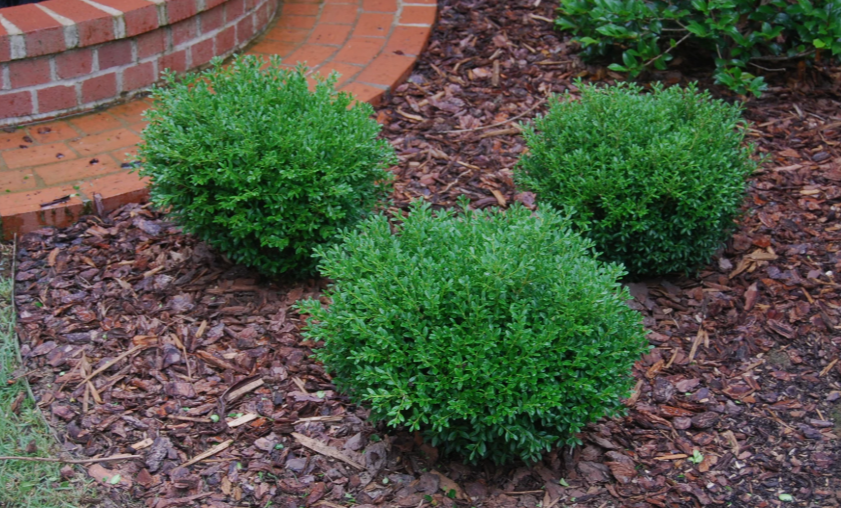
Grace Hendrick Phillips boxwood is a tiny, low-growing evergreen that forms a dense cushion of very small green leaves. It is one of the smallest boxwoods available, staying close to the ground for many years. Its fine texture and slow growth make it a favorite for rock gardens, miniature landscapes, troughs and delicate edging.
For gardeners who love the look of boxwood but have only a small space to fill, this compact shrub offers a neat, evergreen solution. It needs very little pruning and keeps its tidy shape almost on its own. With the right care, it stays attractive year after year.
Botanical Classification
Grace Hendrick Phillips belongs to the box family, a small group of evergreen shrubs that also includes pachysandra and sweet box. It is a dwarf cultivar of littleleaf boxwood, a small-leaved boxwood long grown in Japanese gardens.
Littleleaf boxwood is the parent of many popular cultivars, including Japanese boxwood and Golden Dream. Grace Hendrick Phillips stands out among them for its especially small leaves and very low, spreading form.
Brief History
Littleleaf boxwood has been cultivated in Japan for centuries and was introduced to Western gardens in the 1800s. Over the following decades, gardeners in North America selected many dwarf and compact forms for small gardens and specialty plantings.
Grace Hendrick Phillips was selected in the United States as one of these very dwarf forms. It became popular among collectors of miniature plants, rock gardeners and bonsai enthusiasts. Today, it is still prized as one of the smallest and most refined boxwoods.
Identifying Characteristics
Grace Hendrick Phillips has very small, narrow oval leaves, often less than half an inch long. They are medium to bright green and slightly glossy. The leaves grow in pairs on opposite sides of the stem and are tightly packed together.
It forms a low, dense, cushion-like mound. Most plants stay about 1 foot tall or less, spreading slowly to about 1.5 to 2 feet wide over many years. It grows extremely slowly, often only an inch or so a year.
In cold winters, its leaves may take on bronze or yellow tones, especially in exposed sites. They usually return to green in spring. Like other boxwoods, it produces tiny, pale yellow-green flowers in early spring, though they are easy to miss on such a small plant.
Landscape Uses
Grace Hendrick Phillips is ideal for rock gardens and alpine troughs. Its small leaves and low, mounding shape suit these miniature settings, where larger shrubs would quickly look out of place. It pairs well with small sedums, creeping thyme and dwarf conifers.
It also makes a charming low edging plant. Planted in a row, it forms a tiny hedge along paths, herb gardens and small knot gardens. Its slow growth means it holds a neat line with very little trimming.
It is popular in fairy gardens, model landscapes and containers. Bonsai growers also value it for its small leaves and dense branching. Like other boxwoods, it is deer-resistant, and all parts of the plant are toxic if eaten.
Growing Considerations
Grace Hendrick Phillips is generally hardy from about USDA zone 5 to zone 8. It grows well in the Mid-Atlantic, Northeast, Midwest and Pacific Northwest, and it can grow in warmer areas with some afternoon shade.
It grows in full sun to partial shade. In hot climates, afternoon shade helps prevent leaf scorch. In colder regions, protection from strong winter wind and sun helps reduce bronzing.
Good drainage is essential. Its small, shallow roots can rot quickly in soggy soil. It grows best in loose, well-drained soil enriched with compost, and it does especially well in raised beds, rock gardens and troughs.
A thin layer of fine mulch or small gravel helps keep its roots cool and moist. Keep mulch away from the stems. Water young plants regularly, and check container plants often, since small pots dry out quickly.
Pruning and Care
Grace Hendrick Phillips needs very little pruning. Its naturally low, cushion-like form stays tidy on its own. An occasional light trim in late spring is usually enough to remove stray shoots.
Avoid heavy pruning, since its slow growth means cuts take a long time to fill in. Gently clearing fallen leaves and debris from around and inside the plant helps reduce disease.
Fertilize lightly in spring if growth is weak or leaves look pale. Container plants need more frequent watering and feeding. In very cold areas, potted plants should be moved to a sheltered spot for winter.
Pests and Diseases
Grace Hendrick Phillips is moderately susceptible to boxwood blight, a fungal disease first found in the United States in 2011. Blight causes dark leaf spots, black streaks on stems and rapid leaf drop. Because this plant grows so low and dense, good airflow and careful watering at the base are especially important.
Other possible problems include the boxwood leafminer, spider mites, boxwood psyllids and root rot in poorly drained soils. Spider mites can be more common in hot, dry spots.
The invasive box tree moth, whose caterpillars can strip boxwoods of their leaves, has spread across Europe and into parts of North America. Even small plants should be checked for webbing and chewed leaves in late spring and summer.
Grace Hendrick Phillips vs. Other Dwarf Boxwoods
Grace Hendrick Phillips is often compared with other very small boxwoods. Morris Midget forms a slightly taller, more rounded mound about 1 foot tall. Green Pillow is another low littleleaf boxwood with a dense, flat-topped cushion form.
Kingsville Dwarf is a famous miniature boxwood with tiny leaves, highly prized for bonsai. Grace Hendrick Phillips stands out for its very low, spreading habit and fine texture. It is one of the best choices for gardeners who want a boxwood that stays close to the ground.
Frequently Asked Questions
How big does Grace Hendrick Phillips boxwood get? It usually stays about 1 foot tall or less and spreads to about 1.5 to 2 feet wide over many years. It grows very slowly. Its small size makes it ideal for tight spaces.
How fast does Grace Hendrick Phillips boxwood grow? It grows extremely slowly, often only about an inch a year. This slow growth helps it keep its tidy shape. It rarely needs pruning.
Is Grace Hendrick Phillips boxwood resistant to boxwood blight? No, it is moderately susceptible to boxwood blight. Good airflow, careful watering and buying from reputable nurseries help reduce the risk. Keeping fallen leaves cleared away also helps.
Can Grace Hendrick Phillips boxwood grow in containers? Yes, it grows well in containers, troughs and window boxes. Containers need excellent drainage and regular watering. In cold climates, potted plants need winter protection.
Is Grace Hendrick Phillips boxwood good for bonsai? Yes, its small leaves and dense branching make it a good choice for bonsai. It responds well to careful pinching and shaping. Its slow growth helps it keep its miniature form.
How far apart should Grace Hendrick Phillips boxwoods be planted for edging? For a low edging hedge, plants are usually spaced about 12 to 18 inches apart. Closer spacing fills in faster but reduces airflow. Allowing some space between plants helps prevent disease.
Sources