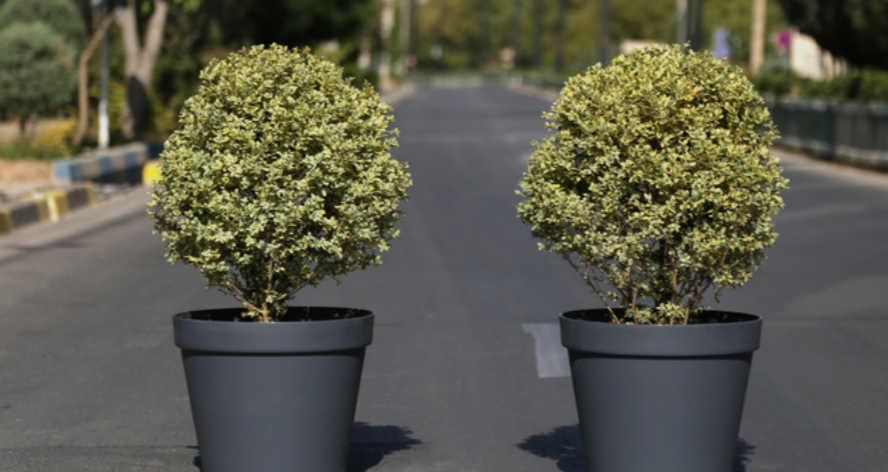
Golden Dream boxwood is a bright, colorful evergreen that brings warmth to the garden all year. Its small green leaves are edged in golden yellow, giving the plant a cheerful glow that stands out against darker foliage. It is one of the most eye-catching boxwoods available and a favorite for brightening borders, containers and low hedges.
Beyond its good looks, Golden Dream is also one of the toughest boxwoods when it comes to disease and pests. It ranks among the most resistant boxwoods to both boxwood blight and boxwood leafminer, two of the biggest threats to boxwoods today. That combination of color and resilience has made it increasingly popular with gardeners across North America.
Botanical Classification
Golden Dream belongs to the box family, a small group of evergreen shrubs that also includes pachysandra and sweet box. It is a cultivar of littleleaf boxwood, a small-leaved boxwood long grown in Japanese gardens. Littleleaf boxwood is also the parent of Japanese boxwood and many other popular cultivars.
It is sold under the trade name Golden Dream, but its registered cultivar name is Peergold. Both names refer to the same plant, which is useful to know when reading plant labels or research trial results.
Brief History
Littleleaf boxwood has been grown in Japan for centuries and was introduced to Western gardens in the 1800s. Over time, nurseries in North America and Europe selected many forms with different shapes, sizes and leaf colors.
Golden Dream was selected for its striking gold-edged variegation and compact habit. In recent years, it has gained even more attention after field trials showed it to be one of the most resistant boxwoods to both boxwood blight and boxwood leafminer. Today, it is often recommended for new plantings where disease is a concern.
Identifying Characteristics
Golden Dream has small, oval leaves about half an inch to an inch long. Each leaf has a green center edged with golden yellow. The gold edges are brightest on new growth and in good light, giving the plant a sunny, two-toned look.
It grows into a compact, rounded mound. Mature plants typically reach about 2 to 3 feet tall and 2 to 3 feet wide. It grows slowly to moderately, often a few inches a year, so it keeps its neat shape with little pruning.
In cold winters, the leaves may take on slight orange or bronze tones, especially in exposed sites. They usually brighten again in spring. Like other boxwoods, it produces tiny, fragrant, pale yellow-green flowers in early spring that attract bees.
Landscape Uses
Golden Dream is ideal for adding color to low hedges and borders. Planted in a row, it creates a bright, golden edge along walkways, patios and flower beds. It also works well in knot gardens and parterres, where its color contrasts with solid green boxwoods.
It is an excellent choice for brightening dark corners and shady beds. Its gold-edged leaves pair beautifully with dark green shrubs, purple-leaved plants and blue-flowered perennials. It also adds year-round color to foundation plantings.
It grows well in containers and window boxes, and its compact size makes it a good choice for small gardens. It can be clipped into small balls and other simple shapes. Like other boxwoods, it is deer-resistant, and all parts of the plant are toxic if eaten.
Growing Considerations
Golden Dream is generally hardy from about USDA zone 5 to zone 9. It grows well across much of the United States, from the Midwest and Northeast to the Southeast and Pacific Northwest.
It grows in full sun to partial shade. Some sun brings out the brightest gold color, while too much shade can dull the variegation. In hot southern climates, afternoon shade helps prevent the gold edges from scorching.
Good drainage is essential. Like all boxwoods, it can develop root rot in waterlogged soil. It grows best in loose, well-drained soil enriched with compost, with a slightly acidic to neutral pH of about 6.5 to 7.0.
Its roots are shallow, so a thin layer of mulch, about 1 to 2 inches, helps keep them cool and moist. Keep mulch away from the stems. Water young plants regularly, and give established plants a deep watering during dry spells and in fall before the ground freezes.
Pruning and Care
Golden Dream needs only light pruning because of its compact, rounded habit. Trim it in late spring after new growth hardens. A second light trim in early summer can keep formal shapes neat.
Occasionally, a shoot with solid green leaves may appear. These reverted shoots grow faster than variegated ones and can take over the plant if left alone. Remove them at their base as soon as they appear.
Avoid pruning in late summer or fall, which can trigger tender growth that is damaged by frost. Thinning a few interior branches each year lets in light and air, which helps keep the plant healthy. Light fertilizer in spring can help if growth is weak.
Pests and Diseases
Golden Dream is one of the most disease- and pest-resistant boxwoods available. In field and greenhouse trials, it was one of only a handful of boxwoods to show resistance or low susceptibility to both boxwood blight and boxwood leafminer. Boxwood blight, first found in the United States in 2011, causes leaf spots, black stem streaks and rapid leaf drop, so this resistance is a major advantage.
Its strong resistance to leafminer is also valuable. Leafminer larvae tunnel inside boxwood leaves and cause yellow or brown blisters, and many popular boxwoods are highly susceptible.
No boxwood is completely immune to problems. Spider mites, boxwood psyllids and root rot in poorly drained soils can still occur. The invasive box tree moth, whose caterpillars can strip boxwoods of their leaves, has spread across Europe and into parts of North America and should be watched for in late spring and summer.
Golden Dream vs. Elegantissima
Golden Dream and Elegantissima are both popular variegated boxwoods. Golden Dream has green leaves edged in bright gold, while Elegantissima has gray-green leaves edged in creamy white. Golden Dream offers a warmer, sunnier look, while Elegantissima has a cooler, silvery appearance.
The biggest difference is disease resistance. Golden Dream is among the most resistant boxwoods to boxwood blight and leafminer, while Elegantissima is highly susceptible to blight. For gardeners in areas where blight is a concern, Golden Dream is usually the safer choice.
Frequently Asked Questions
How big does Golden Dream boxwood get? Golden Dream usually grows about 2 to 3 feet tall and 2 to 3 feet wide. It reaches this size over several years. Its compact size makes it easy to use in small gardens and containers.
Is Golden Dream boxwood resistant to boxwood blight? Yes, it is one of the most blight-resistant boxwoods available. It also has strong resistance to boxwood leafminer. Good spacing and careful watering still help keep it healthy.
Does Golden Dream boxwood need full sun? It grows in full sun to partial shade. Some sun brings out the brightest gold color, while deep shade can dull the variegation. In hot climates, afternoon shade helps protect the leaves.
Why are some branches on my Golden Dream turning solid green? Those are reverted shoots that have lost their variegation. They grow faster than the variegated shoots and can crowd them out. Cut them out at their base to keep the plant fully variegated.
Is Golden Dream the same as Peergold boxwood? Yes, Golden Dream is the trade name, and Peergold is its official cultivar name. Both names refer to the same plant. Research trials often list it as Peergold.
How far apart should Golden Dream boxwoods be planted for a hedge? For a low hedge, plants are usually spaced about 18 inches to 2 feet apart. Closer spacing fills in faster, while wider spacing allows better airflow. Good airflow helps keep plants healthy.
Sources
Virginia Tech, “Boxwood Blight Resistant and Susceptible Cultivars”