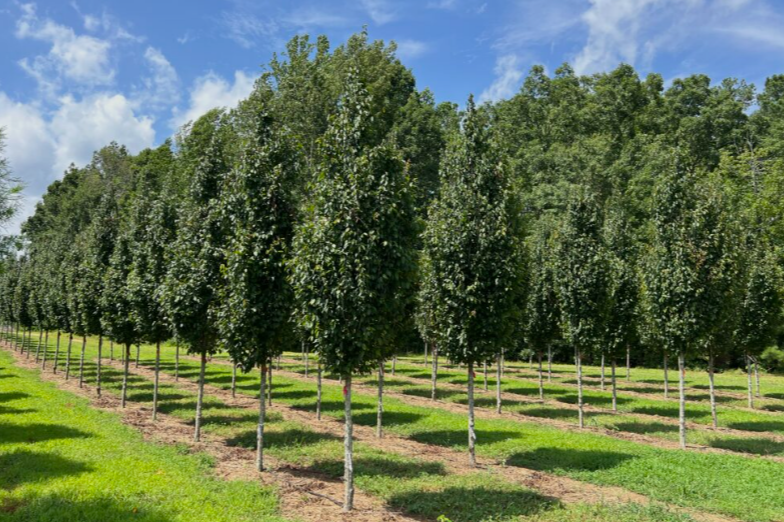
American hornbeam is a small, graceful native tree best known for its smooth, blue-gray bark that ripples like flexed muscles. That unusual bark gives it its most popular nickname, musclewood, and makes it one of the most distinctive trees in eastern North American forests. In fall, its neat, toothed leaves turn shades of yellow, orange and scarlet, adding warm color to shady woodlands and gardens.
This tough, slow-growing tree usually reaches 20 to 30 feet tall and about as wide. It thrives in shade, tolerates wet soils and needs little care once established. Those qualities make it an excellent choice for naturalistic landscapes, stream banks and yards where larger shade trees would be too big.
Botanical Classification
American hornbeam belongs to the birch family, which also includes birches, alders, hazelnuts and hop hornbeam. It is part of the hornbeam group, a genus of about 30 to 40 species found across the temperate Northern Hemisphere. It is the only hornbeam native to North America.
Botanists recognize northern and southern forms of the tree, which differ slightly in leaf size and shape. Related populations also grow in the mountains of Mexico and Central America. It goes by many common names, including musclewood, ironwood, blue beech, muscle beech and water beech.
Brief History
American hornbeam has been part of eastern North American forests for thousands of years. Native peoples used its extremely hard wood for bowls, tool handles and other everyday items. Its toughness also made it useful for mallets, wedges and levers.
Early European settlers called it ironwood because its wood was so hard and heavy that it dulled axes. They used it for tool handles, ox yokes and small wooden parts that had to withstand heavy wear. Because the tree stays small and often has a twisted trunk, it never became an important timber tree, but it remained valued for these specialty uses.
In recent decades, gardeners and landscape designers have come to appreciate American hornbeam as an attractive, low-maintenance native tree. Its tolerance of shade and wet soil, along with its beautiful bark and fall color, have made it increasingly popular in home landscapes.
Identifying Characteristics
The easiest way to identify American hornbeam is by its bark. It is smooth, thin and blue-gray, with long, wavy ridges that run up the trunk and branches. These ridges look like sinews or muscles, especially on older trees. The trunk is often twisted, fluted or slightly crooked.
Its leaves are 2 to 4 inches long, oval and pointed at the tip. The edges are sharply and doubly toothed, and the veins run in straight, parallel lines from the midrib to the edge. The leaves are dark green in summer and turn yellow, orange or red in fall.
In spring, the tree produces small, dangling catkins. Its seeds form in summer as small nutlets, each attached to a green, three-lobed, leaf-like bract. These hang in loose clusters and turn brown as they ripen in fall.
The tree usually grows with a short trunk and a low, spreading crown. Some trees grow with several trunks. Its overall shape is open, rounded to flat-topped, which helps distinguish it from the denser European hornbeam.
Fall Color
American hornbeam offers a colorful fall display. Its leaves turn bright yellow, warm orange and sometimes deep scarlet, depending on the tree and growing conditions. Trees growing in more sun usually show brighter color than those in deep shade.
Fall color typically peaks in October across much of its range. Some named cultivars have been selected for especially brilliant orange and red color.
Wildlife Value
American hornbeam is an important tree for wildlife. Its seeds are eaten by birds such as wild turkey, ruffed grouse and many songbirds. Squirrels and other small mammals also feed on the seeds.
Deer, rabbits and beavers browse its twigs and leaves. Its dense branches offer cover and nesting sites for birds. The tree also supports many native insects, which in turn provide food for birds and other wildlife.
Landscape Uses
American hornbeam is an excellent small shade tree for home yards. Its modest size makes it suitable for planting near houses, patios and decks without overwhelming the space. It also fits well under power lines and in smaller urban lots.
It is a natural choice for woodland gardens, shady borders and naturalized areas. It grows well along stream banks, ponds and rain gardens, where its tolerance of wet soil is a major advantage. It can also be planted in groups to form a natural screen.
Though it is less commonly used for formal hedges than European hornbeam, it can be pruned into a hedge or screen. Upright cultivars are useful as street trees and in narrow spaces. Its smooth, sculptural bark adds winter interest when the leaves have fallen.
Growing Considerations
American hornbeam is hardy from about USDA zone 3 to zone 9, giving it one of the widest ranges of any native tree. It grows naturally across eastern North America, from Quebec and Ontario south to Florida and west to Minnesota and eastern Texas.
It grows best in partial shade to full shade, though it can tolerate full sun if the soil stays moist. In its native habitat, it grows as an understory tree beneath taller oaks, maples and beeches. It prefers moist, rich, slightly acidic soil.
It tolerates periodic flooding and wet soils better than many trees. It does not handle long periods of drought well, so it benefits from regular watering during dry spells, especially when young. A layer of mulch helps keep its roots cool and moist.
It grows slowly, often about 1 foot a year or less. It can be difficult to transplant once large because of its deep roots, so it is best planted young or from containers. Planting in spring gives it the best chance to establish before summer heat.
Pruning and Care
American hornbeam needs little pruning. Remove dead, damaged or crossing branches in late winter while the tree is dormant. If a single trunk is desired, young trees can be trained by removing competing stems.
Because its bark is thin, it is easily damaged by lawn mowers and string trimmers. A ring of mulch around the base helps protect the trunk. Avoid heavy pruning, which can stress the tree and slow its growth.
Pests and Diseases
American hornbeam has few serious pest or disease problems. Leaf spots and minor cankers may appear but rarely cause lasting harm. Some insects, such as leaf-feeding caterpillars, may chew on its leaves without causing serious damage.
Its thin bark makes it sensitive to fire and mechanical injury. Damage to the bark can allow decay to enter the trunk. Stress from drought, compacted soil or poor drainage can make the tree more prone to problems.
Popular Cultivars
Several cultivars have been selected for special shapes and fall color. Firespire is a narrow, upright form that grows about 20 to 25 feet tall and only 10 to 12 feet wide, with brilliant orange-red fall color. Palisade has a dense, uniform, upright oval shape that makes it useful as a street tree or screen.
Native Flame is known for its bright red fall color and compact size. Ball O’ Fire forms a dense, rounded crown with orange and red fall color. These cultivars keep the attractive bark of the species while offering more predictable shapes for home landscapes.
Frequently Asked Questions
Why is American hornbeam called musclewood? It gets the name from its smooth, blue-gray bark, which has long, wavy ridges that look like flexed muscles. The ridges become more noticeable as the tree ages. Its trunk is often fluted or twisted, adding to the muscular look.
How big does an American hornbeam get? It usually grows 20 to 30 feet tall and about as wide. Some trees in ideal conditions grow slightly taller. Its modest size makes it a good choice for small yards.
Does American hornbeam grow in shade? Yes, it is one of the most shade-tolerant native trees. It grows naturally as an understory tree beneath taller forest trees. It can also grow in sun if the soil stays moist.
Is American hornbeam the same as hop hornbeam? No, they are different trees, though both belong to the birch family and are sometimes called ironwood. Hop hornbeam has shaggy, peeling bark and hop-like seed clusters. American hornbeam has smooth, muscular bark and leafy, three-lobed seed bracts.
How fast does American hornbeam grow? It grows slowly, often about 1 foot a year or less. Growth is fastest in moist, rich soil with partial shade. Once established, it is long-lived and needs little care.
Can American hornbeam grow in wet soil? Yes, it tolerates wet soil and periodic flooding better than many trees. It grows naturally along streams and in moist bottomlands. It is a good choice for rain gardens and low, damp areas of the yard.
Sources
Missouri State University, “American Hornbeam”
University of Florida, “American Hornbeam”
USDA NRCS, “American Hornbeam Plant Fact Sheet”