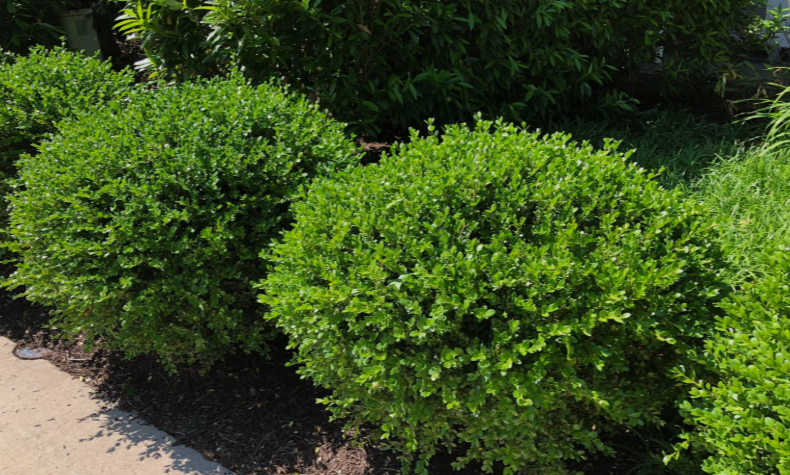
Winter Gem is a hardy, dependable boxwood known for keeping its rich green color through cold winters. It forms a dense, rounded shrub that is easy to shape into hedges, globes and low borders. For gardeners who want a classic boxwood look without constant winter browning, it has become one of the most popular choices in North America.
It also stands out for its disease and pest resistance. Winter Gem is rated as moderately resistant to boxwood blight and has strong resistance to boxwood leafminer, two of the biggest problems facing boxwoods today. That combination of toughness and good looks has made it a favorite with homeowners and landscapers alike.
Botanical Classification
Winter Gem belongs to the box family, a small group of evergreen shrubs that also includes pachysandra and sweet box. It is a selection from the small-leaved Asian boxwoods, the group that includes littleleaf and Japanese boxwood. Research trials usually list it as a form of Japanese boxwood, though some nurseries sell it as a Korean boxwood.
This mix of names reflects its blend of traits. Like Korean boxwood, it handles cold winters well, and like Japanese boxwood, it grows fairly quickly and has bright, glossy leaves. In gardens, it performs well across a wide range of climates.
Brief History
Winter Gem was selected in North America in the mid-1900s from cold-hardy Asian boxwoods. Breeders and nurseries at the time were searching for boxwoods that could survive harsh northern winters better than common and English boxwood, which often suffered winter burn.
Its name reflects its main selling point, the ability to stay green through winter when many boxwoods turn bronze or yellow. Over the decades, it became a staple in garden centers across the northern and central United States and Canada.
Also Read: Different Types of Boxwood Shrubs
Identifying Characteristics
Winter Gem has small, oval leaves about half an inch to an inch long. They are rich green and glossy, with a slightly leathery feel. The leaves grow in pairs on opposite sides of the stem, packed closely together for a dense, full look.
In winter, its leaves stay greener than those of many boxwoods. In very cold, sunny or windy sites, they may take on a slight bronze tint, but they usually green up quickly in spring.
Left unpruned, Winter Gem grows into a rounded shrub about 3 to 4 feet tall and wide, sometimes slightly larger with age. It grows faster than English and Korean boxwood, often 3 to 6 inches a year. This quicker growth helps new hedges fill in sooner.
Like other boxwoods, it produces tiny, fragrant, pale yellow-green flowers in early spring. They attract bees but are easy to miss among the leaves. Its foliage has a mild boxwood scent.
Landscape Uses
Winter Gem is an excellent choice for low to medium hedges. It responds well to shearing and fills in densely, creating a solid green border. It is often planted along walkways, patios, driveways and property lines.
It also works well in foundation plantings, where its rounded shape softens the base of a house. Gardeners clip it into balls, cubes and other simple forms. It makes an attractive accent in containers and planters, especially near entrances.
Like other boxwoods, Winter Gem is deer-resistant, making it useful in areas where many shrubs are browsed. All parts of the plant are toxic if eaten, so it should be kept away from pets and livestock that might chew on it.
Growing Considerations
Winter Gem is generally hardy from about USDA zone 5 to zone 9. It grows well in the northern and central United States and also handles warmer summers better than many cold-hardy boxwoods. This wide range makes it one of the most versatile boxwoods available.
It grows in full sun to partial shade. In colder areas, a spot sheltered from strong winter wind and late-afternoon winter sun helps prevent bronzing. In hot southern areas, a little afternoon shade helps keep its leaves green.
Good drainage is essential. Like all boxwoods, Winter Gem can develop root rot in soggy soil. It grows best in loose, well-drained soil enriched with compost. It prefers slightly acidic to neutral soil, around pH 6.5 to 7.0.
Its roots are shallow, so a thin layer of mulch, about 1 to 2 inches, helps protect them. Mulch should be kept off the stems. Water young plants regularly, and give established plants a deep watering in fall before the ground freezes.
Pruning and Care
Winter Gem tolerates pruning well and can be kept as a neat hedge or shaped into simple forms. Trim it in late spring after new growth hardens. A second light trim in early summer can keep formal shapes crisp.
Avoid pruning in late summer or fall. Late cuts can trigger tender growth that is damaged by frost. Thinning a few interior branches each year lets in light and air, which helps reduce disease.
Light fertilizer in spring is helpful if growth is weak or leaves look pale. In very cold or exposed sites, young plants can be wrapped in burlap for winter to reduce winter burn and snow damage.
Pests and Diseases
Winter Gem is one of the more pest- and disease-resistant boxwoods. It is rated as moderately resistant to boxwood blight, a fungal disease first found in the United States in 2011. Blight causes leaf spots, black streaks on stems and rapid leaf drop. Good spacing, watering at the base of the plant and buying from reputable nurseries help reduce the risk.
It also has strong resistance to the boxwood leafminer, a tiny fly whose larvae tunnel inside leaves. This is a major advantage over popular boxwoods such as Green Velvet and Green Mountain, which are very susceptible to leafminer.
Other possible problems include spider mites, boxwood psyllids and root rot in poorly drained soils. The invasive box tree moth, whose caterpillars can strip boxwoods of their leaves, has spread across Europe and into parts of North America. Gardeners should watch for webbing and chewed leaves in late spring and summer.
Winter Gem vs. Green Velvet
Winter Gem and Green Velvet are both popular hedge boxwoods, but they differ in a few important ways. Winter Gem has slightly glossier leaves, grows a bit faster and has much better resistance to boxwood leafminer. It is also rated more resistant to boxwood blight.
Green Velvet is hardier in the coldest areas, growing well to zone 4, and has a softer, fuller look. For gardeners in zones 5 to 9 who want a tough, low-maintenance hedge, Winter Gem is often the better choice.
Winter Gem vs. Wintergreen
Winter Gem is sometimes confused with Wintergreen, another popular boxwood with good winter color. Wintergreen is a Korean boxwood with smaller leaves and slower growth. It is very cold-hardy and also resistant to leafminer and boxwood blight.
Winter Gem grows faster and has slightly larger, glossier leaves. Both are good choices for hedges, but Winter Gem fills in sooner, while Wintergreen is better suited to the coldest northern gardens.
Sources
Virginia Tech, “Boxwood Blight Resistant and Susceptible Cultivars”
North Carolina State University, “Susceptibility of Commercial Boxwood Cultivars to Boxwood Blight”