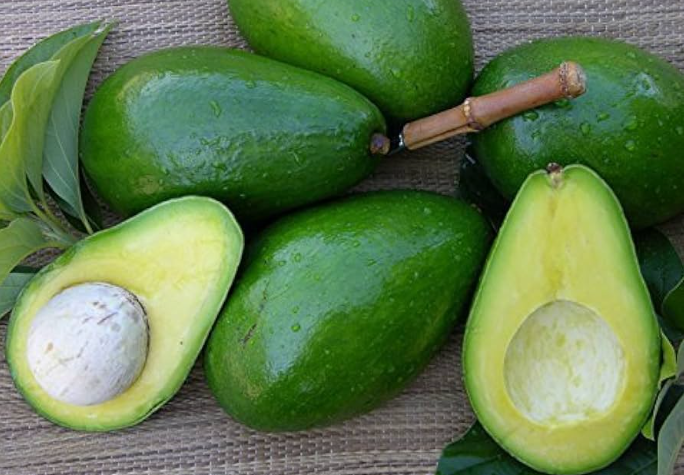
Florida avocados occupy a distinct and often overlooked corner of the avocado world, since the vast majority of avocados sold in American supermarkets are the small, bumpy-skinned Hass variety grown primarily in California and Mexico, while Florida has cultivated an entirely different tradition built around smooth-skinned, often much larger fruit that stays green even when fully ripe. After citrus and blueberries, avocados rank among the top fruit crops grown in the state, with Miami-Dade and Collier counties leading Florida in overall avocado production. Experts estimate there are roughly 25 major and 25 minor avocado varieties grown commercially in Florida today, drawn from a pool of more than 50 distinct named cultivars that have been developed, tested, and grown across the state’s Central and Southern regions since commercial cultivation began in the 19th century, with the first documented planting recorded in 1833.
Nearly all avocado varieties trace their genetic origin to one of three distinct races: West Indian, Guatemalan, and Mexican, each suited to different climates and offering different fruit characteristics. Florida’s avocado industry is built primarily around West Indian types and West Indian-Guatemalan hybrids, which thrive in the state’s hot, humid subtropical climate but generally show far less cold tolerance than the Mexican and Mexican-Guatemalan hybrid types more commonly grown in California, including the famous Hass variety. This fundamental difference in genetic background explains why Florida avocados typically taste, feel, and behave so differently from the Hass avocados most American consumers know best, generally featuring lower oil content, higher water content, thinner and more leathery skin, and a lighter, milder flavor rather than the dense, buttery richness associated with Mexican-type fruit.
Fruit size varies dramatically across Florida’s avocado varieties, ranging from modest, half-pound fruits comparable to a Hass avocado up to enormous specimens weighing 2.5 pounds or more, some of the largest avocados grown anywhere in the world. Harvest season is another defining characteristic used to organize and market Florida’s avocado varieties, with early-season types typically available from June through September, mid-season varieties following from October through December, and late-season types extending the harvest window all the way into March, giving Florida growers and consumers access to fresh, locally grown avocados across nearly the entire year. Avocado flowers themselves are unusually complex, opening as both male and female at different times of day, and Florida varieties are classified into “Type A” and “Type B” categories based on this flowering behavior, which matters considerably for growers hoping to maximize cross-pollination and fruit set within a mixed planting.
In recent decades, Florida’s avocado industry has faced a serious challenge from laurel wilt disease, a fungal infection spread by invasive ambrosia beetles that was first detected in the state in 2002 and has since significantly impacted commercial groves, prompting breeders to actively pursue new disease-resistant varieties to help sustain the industry going forward. Despite this pressure, Florida avocados remain a distinctive and beloved regional crop, often sold locally through farm stands and small trucks along the roadside rather than through the large-scale distribution networks that dominate the Hass avocado trade. The following 30 varieties represent some of the most significant and widely recognized Florida avocado types, spanning the full range of harvest seasons, fruit sizes, and cold tolerance levels that make the state’s avocado industry so distinct from its West Coast counterpart.
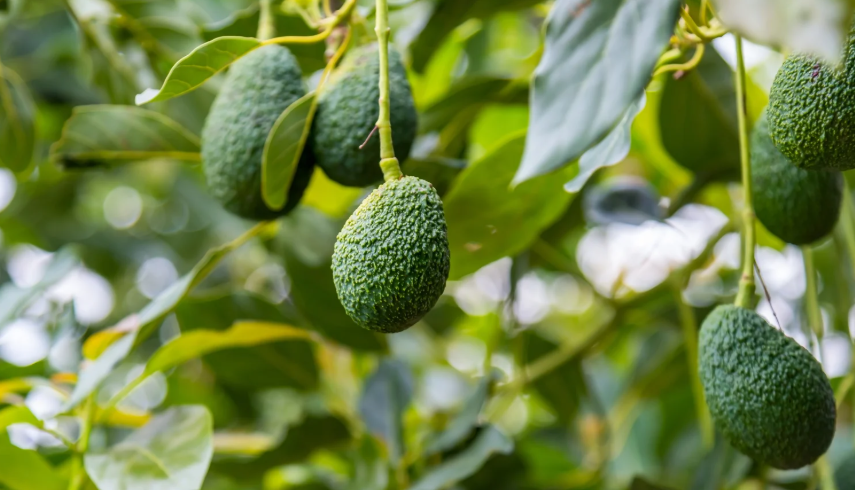
Florida Avocado Varieties
Choquette
Choquette is one of the most widely recognized late-season Florida avocado varieties, typically harvested from December through March and prized for its exceptionally large size, with individual fruits commonly weighing between 20 and 40 ounces, some of the biggest avocados grown commercially anywhere. Its glossy, smooth, dark green skin encases creamy, rich flesh with a mild, nutty flavor that has made it a favorite for both commercial sale and home cultivation across South Florida. As a hybrid of West Indian and Guatemalan parentage, Choquette shows moderate cold tolerance, generally able to withstand temperatures in the 25 to 30 degree Fahrenheit range, making it a reliable choice for growers throughout the warmer parts of the state.
Monroe
Monroe is considered a commercial favorite throughout Florida and much of tropical America, valued for producing large, abundant fruit of excellent eating quality, typically harvested from November through January. As a hybrid between West Indian and Guatemalan avocado types, Monroe offers a useful combination of the West Indian race’s productivity with somewhat improved cold hardiness, tolerating temperatures in the 25 to 30 degree Fahrenheit range and making it a dependable choice for commercial groves across the central and southern parts of the state.
Simmonds
Simmonds is South Florida’s most popular early-season avocado, typically harvested from July through September and valued for its combination of strong production, excellent trade acceptance, and superb eating quality. Its leathery skin peels away easily once the fruit is ripe, revealing smooth, nutty-flavored flesh underneath, though as a West Indian variety it shows little cold tolerance and is best suited to the warmest coastal growing regions of the state. Its dependable performance has made it a favorite for both home gardens and commercial groves throughout South Florida.
Donnie
Donnie is typically the very first avocado variety to reach harvest each season, picked deliberately before the height of hurricane season to reduce the risk of crop loss from summer storms. Growers judge ripeness by feel, looking for fruit that is smooth with no visible ridges on the skin, and as a West Indian type Donnie shows little cold tolerance, restricting its cultivation to the warmest parts of Florida. Some consumers mistakenly dismiss Florida avocados as watery based on early Donnie fruit picked too soon, when in fact properly matured fruit offers a much fuller flavor and texture.
Russell
Russell is especially prized within the Cuban community for its superior flavor and texture, easily recognized by its distinctive gourd-like or “longneck” shape featuring roughly 6 inches of neck with no visible seed mark, a characteristic that allows the fruit to be sliced into perfect circles once cut open. Because this unusual elongated shape makes commercial packing and shipping difficult, most Russell avocados are sold locally, often directly from roadside trucks and stands rather than through large retail chains. Its smooth, buttery flavor and old-variety pedigree have made it one of Florida’s most beloved and sought-after avocado types among longtime residents.
Lula
Lula stands out for its exceptionally long harvest period, making it a particularly attractive choice for winter residents and growers who want avocados available across an extended stretch of the cooler months. As a hybrid of West Indian and Guatemalan parentage, Lula shows meaningfully better cold tolerance than purely West Indian varieties, allowing it to be grown successfully in areas that experience occasional light frost, and its dependable, extended production window has kept it a long-standing favorite in Florida dooryard plantings and commercial groves alike.
Brogdon
Brogdon is a notably cold-hardy Mexican-type avocado featuring striking purple skin that encloses juicy, buttery-flavored yellow flesh, typically harvested from July through August. As a late-season producer, its large fruit can weigh anywhere from 14 to 24 ounces, and its Mexican heritage gives it considerably better cold tolerance than most other Florida varieties, capable of withstanding temperatures in the low 20s Fahrenheit. This exceptional hardiness, combined with its attractive purple coloring, has made Brogdon a popular choice for growers in the cooler, more northern reaches of Florida’s avocado-growing region.
Hall
Hall is closely related to Choquette in both shape and overall size, typically harvested from October through November, but distinguishes itself with nuttier, drier, and noticeably thicker flesh, while still retaining a satisfyingly juicy and fruity character. As a moderately cold-tolerant hybrid variety, it withstands temperatures in the 25 to 30 degree Fahrenheit range, making it a reliable mid-to-late season option for growers throughout Central and South Florida who want a Choquette-like fruit with a slightly firmer, nuttier eating experience.
Pollock
Pollock is one of the historically significant West Indian avocado varieties long associated with Florida’s commercial avocado industry, though like most West Indian types it shows little tolerance for cold and is best suited to the warmest coastal growing areas of the state. Its place among the classic, long-cultivated Florida varieties has kept it a recognized name in the state’s avocado history, even as newer, more disease-resistant and cold-hardy hybrids have increasingly taken over larger shares of commercial production.
Waldin
Waldin is a West Indian avocado variety with little cold tolerance, restricting its successful cultivation to the warmest parts of Florida along the southeast and southwest coasts. Despite its cold sensitivity, Waldin has remained a recognized and commercially relevant variety within Florida’s avocado industry, valued by growers in appropriately warm microclimates for its reliable production and the classic West Indian eating qualities of lighter flesh and thinner, more delicate skin.
Hardee
Hardee, sometimes marketed under the name Hardee Red, is a hybrid variety combining West Indian and Guatemalan parentage, though it shows little cold tolerance overall and requires the same warm, frost-free conditions that most purely West Indian types demand. Its place within Florida’s broader catalog of named avocado cultivars reflects the state’s long history of hybridizing between the West Indian and Guatemalan races in pursuit of improved size, flavor, and production characteristics.
Dupuis
Dupuis is a West Indian avocado variety with little cold tolerance, best suited to the warmest, most frost-free regions of Florida’s avocado-growing areas along the coasts. As with many of the state’s classic early West Indian cultivars, Dupuis has remained part of the recognized catalog of Florida varieties tracked by agricultural authorities, even as it has become somewhat less commercially prominent than more widely marketed types like Choquette or Monroe.
Bernecker
Bernecker is a West Indian avocado variety recognized as one of Florida’s classic named cultivars, commonly listed among the state’s popular home garden and small commercial grove options. Its West Indian heritage gives it the characteristically lighter, more delicate flesh and thinner skin typical of the race, along with the more limited cold tolerance that restricts its reliable cultivation to Florida’s warmest, most frost-protected growing regions.
Booth 8
Booth 8 is a moderately cold-tolerant avocado variety of Guatemalan origin, capable of withstanding temperatures in the 25 to 30 degree Fahrenheit range, which allows it to be grown successfully in a somewhat broader range of Florida locations than the more cold-sensitive West Indian types. Its Guatemalan heritage typically brings a richer flesh texture and higher oil content than purely West Indian varieties, making it a valued option for growers wanting a Florida-adapted avocado with eating qualities closer to the denser, creamier fruit associated with Guatemalan and Mexican types.
Beta
Beta is a hybrid avocado variety combining West Indian and Guatemalan genetics, offering moderate cold tolerance in the 25 to 30 degree Fahrenheit range that makes it suitable for a wider swath of Florida’s growing regions than purely West Indian cultivars. This hybrid vigor, combining the productivity of West Indian types with the improved hardiness and richer flavor characteristics of Guatemalan parentage, reflects the broader breeding strategy that has shaped much of Florida’s modern avocado catalog.
Loretta
Loretta is a West Indian-Guatemalan hybrid avocado variety showing moderate cold tolerance, generally able to withstand temperatures in the 25 to 30 degree Fahrenheit range. Its balanced parentage has made it a dependable choice for Florida growers seeking a middle ground between the high productivity typical of West Indian types and the improved cold hardiness and richer flesh more commonly associated with Guatemalan varieties.
Catalina
Catalina was originally introduced to Florida from Cuba and has since become a recognized mid-season variety, prized for its attractive pear shape and its especially rich flavor compared to some of the milder West Indian types grown in the state. Its Cuban origins reflect the broader history of Caribbean influence on Florida’s avocado industry, as growers throughout the region have long exchanged and adapted varieties across the narrow stretch of water separating South Florida from Cuba and other nearby islands.
Day
Day is a more cold-tolerant Florida avocado variety, capable of withstanding infrequent but genuine below-freezing temperatures in the 24 to 28 degree Fahrenheit range, considerably better cold performance than many of the state’s classic West Indian cultivars. This improved hardiness has made Day a popular recommendation for growers in Central Florida and other parts of the state that experience occasional cold snaps beyond what purely tropical West Indian varieties can reliably survive.
Tonnage
Tonnage is a Guatemalan-origin avocado variety showing improved cold tolerance in the 24 to 28 degree Fahrenheit range, making it suitable for planting in parts of Florida that occasionally dip below freezing during winter months. Its Guatemalan heritage generally brings richer, higher-oil flesh than purely West Indian types, and its combination of productivity and reasonable hardiness has kept it a recognized name among growers specifically seeking a heavier-yielding tree for guacamole production.
Wurtz
Wurtz is a true dwarf avocado tree, a Mexican-Guatemalan hybrid valued as much for its compact, ornamental growth habit as for its dark green, flavorful fruit, typically harvested from January through March. Its naturally small stature makes it an excellent choice for home gardeners with limited space, since it still produces an abundant crop of fresh avocados while also functioning as an attractive evergreen landscape feature, a rare combination of practicality and ornamental value among avocado varieties.
Winter Mexican
Winter Mexican is a Mexican-Guatemalan hybrid variety offering meaningfully improved cold tolerance compared to most Florida avocado cultivars, able to withstand infrequent freezing temperatures in the 24 to 28 degree Fahrenheit range. This hardiness has made it a popular choice for growers in the cooler fringes of Florida’s avocado-growing regions, where purely West Indian and even many Guatemalan hybrid types would struggle to survive an unexpected cold snap.
Mexicola
Mexicola is a purely Mexican-type avocado renowned for being among the most cold-hardy avocado varieties grown anywhere, capable of tolerating temperatures well into the low 20s Fahrenheit, considerably colder than nearly any West Indian or hybrid type can withstand. Its fruit is comparatively small, with thin, dark purple-to-black skin and rich, high-oil flesh reminiscent of a small Hass avocado, making it a popular choice specifically for growers in Florida’s cooler inland and northern growing areas who still want to produce a genuinely flavorful, oil-rich avocado.
Reed
Reed is a Guatemalan-type avocado offering moderate cold tolerance in the 25 to 30 degree Fahrenheit range, notable for its distinctively round shape and thick, pebbly skin that sets it apart from the smoother-skinned, more elongated fruit typical of many other Florida varieties. Its rich, dense flesh and higher oil content, characteristic of its Guatemalan heritage, have made it a popular choice among growers and consumers seeking an eating experience closer to a Hass avocado than the lighter, more watery flesh typical of purely West Indian types.
Marcus
Marcus, sometimes sold under the name Marcus Pumpkin for its notably big, round shape reminiscent of its namesake gourd, is a hybrid Florida avocado variety valued by collectors and home growers for its unusual size and form. Its distinctive rounded profile sets it apart visually from the more typical pear-shaped fruit produced by most other Florida cultivars, making it a favorite conversation piece among dedicated tropical fruit tree enthusiasts as well as a productive garden tree in its own right.
Nadir
Nadir is a West Indian avocado variety with little cold tolerance, restricting its reliable cultivation to Florida’s warmest, most frost-free coastal growing regions. As with several other classic West Indian cultivars in Florida’s extensive avocado catalog, Nadir remains part of the historically documented variety list maintained by state and federal agricultural authorities, even as it has become a less commonly planted commercial option compared to newer, more cold-hardy hybrid introductions.
Miguel
Miguel is a hybrid avocado variety combining West Indian and Guatemalan parentage, part of the broader effort within Florida’s avocado breeding history to combine the productivity of West Indian types with the richer flavor and improved hardiness typically associated with Guatemalan genetics. Its inclusion among Florida’s recognized named cultivars reflects the depth and diversity of the state’s avocado breeding programs, many of which have produced dozens of hybrid varieties over the decades in pursuit of improved size, flavor, and climate adaptability.
Kampong
Kampong, sometimes marketed under the name Sushi, is a hybrid avocado variety showing meaningfully better cold tolerance than many other Florida cultivars, capable of withstanding infrequent freezing temperatures in the 24 to 28 degree Fahrenheit range. Its improved hardiness has made it a valued option for growers in Florida’s cooler growing regions, and its more distinctive branded name reflects the increasing effort among nurseries to market specific Florida avocado varieties with memorable, consumer-friendly names.
Florida Hass
Florida Hass is a Mexican-type avocado grown specifically to bring the qualities of the famous California Hass variety to Florida’s climate, prized for its rich, nutty flavor and high oil content in a fruit that typically weighs only about half a pound, considerably smaller than most classic Florida cultivars like Choquette or Monroe. Its Mexican heritage gives it notably better cold tolerance than purely West Indian Florida types, and its similarity to the globally dominant Hass variety has made it a popular choice for growers wanting a familiar, richly flavored avocado adapted specifically to Florida growing conditions.
Gorham
Gorham is a Florida avocado variety recognized and documented by federal agricultural authorities, part of the state’s extensive catalog of named cultivars developed over more than a century of avocado breeding and selection. Though less widely marketed to home consumers than headline varieties like Choquette or Lula, its continued presence in official Florida variety records reflects the sheer depth and diversity of avocado breeding work carried out across the state’s growing regions.
Simpson
Simpson is another Florida avocado variety documented within the state’s official catalog of named cultivars, representing part of the extensive breeding and selection history that has produced Florida’s uniquely diverse avocado industry compared to the far more standardized Hass-dominated market found in California and most other American growing regions. Its inclusion among the state’s recognized varieties underscores just how many distinct, locally developed avocado types exist within Florida’s horticultural history beyond the handful of names most commonly recognized by consumers.