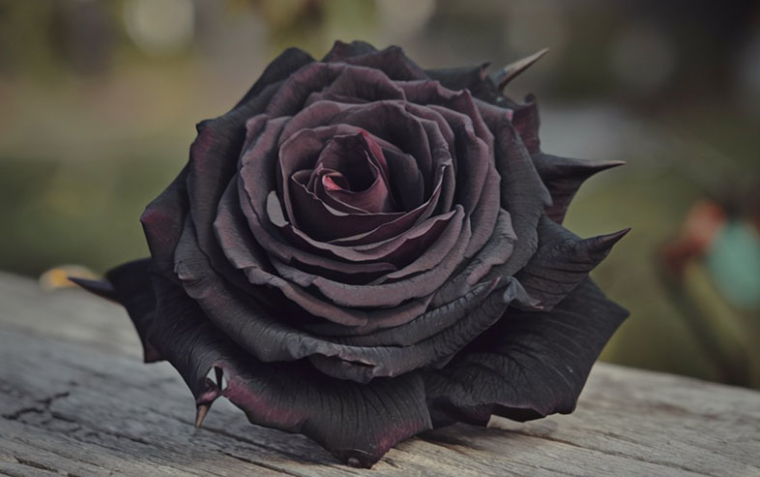
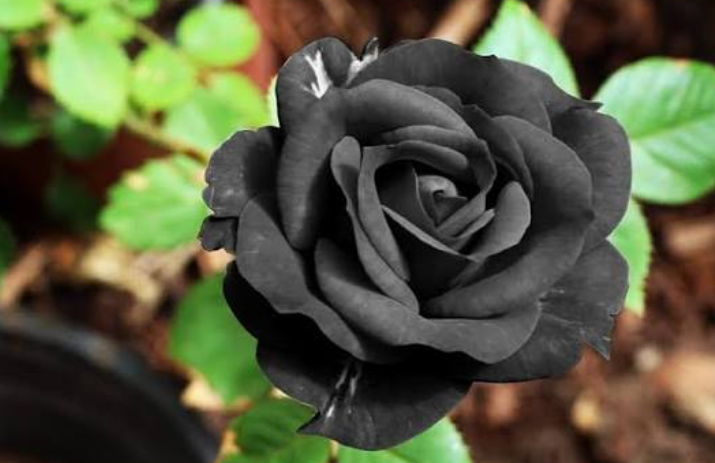
Black roses share the same essential secret as blue roses: they do not truly exist in nature, since no rose produces a genuine black pigment, and every flower marketed as “black” is actually an extremely dark red, maroon, or deep purple cultivar whose color intensifies to the point of appearing black under the right conditions. This effect typically depends heavily on light, temperature, and the age of the individual bloom, with the darkest, most convincing black appearance usually concentrated at the tightly furled bud stage before the flower opens and the true crimson, burgundy, or plum coloring underneath becomes more visible. Black-toned roses are produced across nearly every classification recognized by the American Rose Society, including hybrid tea, floribunda, shrub, miniature, and even a small number of historic old garden roses, with hybrid teas dominating the category since their tall, pointed buds hold the darkest color longest before unfurling.
A mature hybrid tea or shrub-type black rose typically reaches 3 to 6 feet tall with large blooms averaging 3 to 5 inches across, while floribundas and miniatures stay considerably more compact, from under 2 feet for miniature types up to about 4 feet for floribundas, carrying their dark blooms in generous, repeat-flowering clusters rather than as single cutting stems. French breeding houses, particularly the Meilland family, have played an outsized role in developing the deepest and most commercially successful black-toned roses, though German, English, and American hybridizers have all contributed significant cultivars to the category as well. One especially unusual entry in the black rose world is not a bred hybrid at all but a naturally occurring phenomenon: a rose grown in the village of Halfeti in southeastern Turkey turns from deep red to a genuinely near-black shade due to the specific soil pH and mineral content unique to that region, a color transformation that cannot be reliably reproduced anywhere else on earth.
Fragrance varies considerably across black-toned roses, and this variation is not simply incidental but often directly correlated with the intensity of the darkest color, since many of the pigments responsible for the deepest maroon and near-black tones seem to travel alongside stronger perfume in certain cultivars while other extremely dark roses were bred with a near total absence of scent. Most black-toned roses are hardy across USDA zones 4 through 10 depending on the specific cultivar, and because dark pigmentation can sometimes make petals more prone to heat damage and sunburn in intense afternoon light, many of the darkest cultivars perform best with some protection from the harshest part of the day, holding their deep coloring far better in morning sun or partial afternoon shade.
Symbolically, black roses represent mystery, farewell, rebirth, and in some interpretations, a bold or even rebellious kind of elegance, a meaning shaped considerably by their genuine rarity and the sense that gardeners are cultivating something nature never quite intended to produce. Many of the cultivars below carry deep historical pedigrees stretching back well over a century, alongside a number of striking modern introductions from Meilland and other major breeding houses specifically working to push the boundaries of how dark a rose could plausibly become. Whether grown for dramatic contrast in a mixed border, cut for a moody, sophisticated bouquet, or simply admired as one of the rose world’s most captivating optical illusions, the following 20 types represent the darkest and most convincingly black roses available to gardeners today.
Types of Black Roses
Black Baccara
Black Baccara is a hybrid tea bred by the Meilland family in France and introduced in the early 2000s, producing nearly black buds that gradually unfurl into deep, velvety crimson blooms with a glossy, almost lacquered petal texture unlike most other roses. Reaching about 2 to 3 feet wide and 2.5 to 4.5 feet tall in an upright, bushy growth habit, it is essentially scentless, but its dramatic, near-black appearance more than compensates for the lack of fragrance, making it one of the most commercially successful and widely recognized black roses in the global cut flower trade. Hardy across USDA zones 6 through 10, it blooms throughout the growing season with particular intensity from late spring through summer, and its cold tolerance combined with its striking color has made it a favorite for both florists and home gardeners seeking a truly dramatic centerpiece rose.
Black Magic
Black Magic is a hybrid tea bred by the Meilland family in France and introduced in 1997, producing extremely dark, near-black buds that open to reveal deep, velvety red blooms with only a light fragrance but exceptional vase life once cut. Its dramatic bud-stage coloring and long, straight stems have made it an especially popular choice in the commercial cut flower trade, where its striking near-black appearance in the tightly furled bud photographs beautifully in bouquets and floral arrangements before the flower fully opens to reveal its true crimson depths.
Dark Knight
Dark Knight is a hybrid tea rose producing dark crimson petals that appear almost entirely black when fully open, blooming from late spring into early summer on an upright, bushy plant reaching 2 to 3 feet wide and 2.5 to 4.5 feet tall. Its exceptional cold hardiness, tolerating conditions across USDA zones 5 through 10, has made it a favorite among gardeners in colder climates who still want the dramatic, deeply saturated look typically associated with warmer-climate black rose cultivars, combining reliable garden performance with genuinely striking, moody color.
Black Beauty
Black Beauty is a hybrid tea developed by French hybridizers, producing deep crimson petals that unfurl dramatically from tight, pointed buds to create an almost black appearance under certain light conditions, particularly in the cooler hours of morning or evening. Reaching about 4 feet tall on strong, upright stems well suited to cutting and indoor display, this heat-tolerant rose thrives across USDA zones 6 through 11 with consistent moisture and full sun exposure, and its combination of dramatic coloring and reliable garden performance has made it a favorite among gardeners specifically drawn to the symbolism of mystery and romantic intrigue associated with the darkest roses.
Black Cherry
Black Cherry is a floribunda producing deep burgundy petals that transform toward a rich, near-black appearance in certain light, carried in generous clusters on an upright plant reaching up to 4 feet tall. Its hardy constitution flourishes under intense sunlight, and while it lacks any notable fragrance, its long-lasting, richly colored blooms and robust, structural growth habit have made it a popular choice for adding architectural presence and sophisticated dark color to warm, sun-drenched garden beds and containers.
Black Velvet
Black Velvet is a shrub rose prized both for its deep burgundy, near-black coloring and its notably strong fragrance, a combination that has made it especially valued within the perfume industry alongside general garden cultivation. Reaching 2 to 4 feet wide and 3 to 6 feet tall, its deep, velvety petals create a luxurious, almost mystical contrast against dark green foliage, and it blooms reliably every year from summer through fall, offering gardeners an unusually long season of dramatic, richly scented color compared to many other cultivars in the black rose category.
Nigrette
Nigrette is a floribunda bred by Jean Gaujard in France and introduced in 1934, one of the earliest and most historically significant black-toned roses in modern rose breeding, producing mysterious, dark, black-plum petals that unfold with an almost velvet-like texture. Its medium-sized blooms appear on strong stems reaching 2 to 3 feet tall, and the plant performs best in slightly acidic soil, where it produces its deepest, most dramatically hued flowers, with a fragrance intense enough to have kept it a favorite among collectors of historic dark-colored roses for nearly a century.
Black Jade
Black Jade is a miniature rose bred by J. Benjamin Williams in the United States and introduced in 1985, producing deep crimson petals that intensify toward a genuinely midnight-black shade in warm temperatures, held on compact bushes reaching just 1 to 2 feet tall. Its small but powerfully dark, polished-obsidian-like blooms have made it a favorite among gardeners with limited space who still want the dramatic visual impact of a black rose, and its compact branches and diminutive scale make it particularly well suited to container growing and tight landscape designs.
Taboo
Taboo is a hybrid tea bred by the Meilland family in France and introduced in the early 1990s, producing large, deep velvety red, almost black buds that open to reveal richly colored, high-centered blooms with a light, sweet fragrance. Its dramatic, provocatively named coloring and classic hybrid tea form have made it a popular choice among gardeners and floral designers seeking a dark, sophisticated rose with genuine Meilland breeding pedigree behind its striking near-black bud stage.
Halfeti Black Rose
The Halfeti Black Rose, also known locally as Kara Gul, is one of the rarest roses in the world, an old, naturally occurring variety found only in the village of Halfeti in southeastern Turkey, where the specific soil pH and micronutrient composition of the region cause the flower to transform from deep red into a genuinely pitch-black shade as it matures. Reaching 3 to 4 feet wide and tall in an upright growth habit, this temperature-sensitive rose has defied attempts to reproduce its true black coloring anywhere outside its native soil, making it a singular botanical curiosity rather than a conventionally bred cultivar, and one of the very few roses in the world that can be said to achieve an authentically black appearance through natural means alone.
Midnight Blue
Midnight Blue is a shrub rose bred by Tom Carruth for Weeks Roses in the United States and introduced in 2003, producing deep, velvety, dark purple blooms so richly saturated they frequently read as black rather than purple in ordinary garden light, carrying an intensely strong, spicy-sweet fragrance on a compact, well-branched plant reaching about 3 feet tall. Its exceptionally dark coloring and powerful perfume have made it a favorite among gardeners seeking the darkest possible shade available in a modern, disease-resistant shrub rose suitable for smaller garden spaces.
Louis XIV
Louis XIV is a historic hybrid tea, sometimes classified among the early hybrid perpetuals, bred by Joseph Pernet-Ducher in France and introduced in 1859, producing small but intensely dark, velvety maroon-red blooms with a strong, classic old rose fragrance considered remarkable for their depth of color even by 19th-century standards. Its compact growth habit and richly colored, densely petaled blooms made it one of the earliest roses genuinely celebrated for approaching true black coloring, and its historic significance has kept it treasured among collectors of antique dark-toned roses for over 160 years.
Oklahoma
Oklahoma is a hybrid tea bred by O.L. Weeks and introduced by Weeks Roses in the United States in 1964, producing velvety petals so deeply colored that they appear almost maroon or black depending on the light, carrying a sweet, floral fragrance. The plant is notably vigorous, capable of reaching up to 8 feet tall and sometimes trained as a small climber, with excellent resistance to fungal disease and long stems well suited to a dedicated cutting garden, its unusually dark, dramatic coloring making it a long-standing favorite among gardeners specifically seeking the darkest possible shade of red-black.
Ink Spots
Ink Spots is a hybrid tea bred by Wayne Williams in the United States and introduced in 1975, producing extremely dark, near-black, velvety red blooms with a light fragrance on a moderately vigorous plant reaching 3 to 4 feet tall. Its unusually dark coloring, among the deepest of any hybrid tea from its era and named directly for its resemblance to spilled ink, has made it a favorite among collectors and gardeners specifically seeking the darkest possible shade in a classic hybrid tea rose.
Deep Secret
Deep Secret, also sold under the name Nuit d’Orient in some markets, is a hybrid tea bred by Dickson Roses in Northern Ireland and introduced in 1977, producing extremely dark, velvety crimson blooms so deep in color they can appear nearly black under certain light, particularly in the tightly furled bud stage. Its strong, classic old rose fragrance and moody, dramatic coloring have made it a long-standing favorite among gardeners seeking a genuinely dark hybrid tea, and its reliable repeat bloom has kept it in commercial production for decades since its release.
Charles Mallerin
Charles Mallerin is a hybrid tea bred by Francis Meilland in France and introduced in 1951, named in honor of the pioneering French rose breeder responsible for developing many of the deep red and near-black genetics used throughout 20th-century rose breeding. Its extremely dark, velvety maroon-red blooms, among the darkest produced by mid-century rose breeding, carry a strong, classic old rose fragrance, though the plant’s somewhat lax growth habit and susceptibility to mildew have made it more of a specialty choice for dedicated collectors than a widely planted garden rose.
Black Pearl
Black Pearl is a miniature rose producing small, densely petaled, deep maroon-black blooms with a glossy, polished sheen reminiscent of its namesake gemstone, held on a compact plant well suited to containers and small garden borders. Its diminutive size and richly dark, lustrous coloring have made it a popular choice among miniature rose enthusiasts specifically seeking the darkest possible bloom in a plant scaled for limited garden space.
Black Ice
Black Ice is a shrub rose producing deep, near-black buds that open to reveal richly saturated dark red blooms with a cool, almost icy sheen to the petal surface that gives the cultivar its evocative name. Its dramatic, high-contrast coloring and reliable garden performance have made it a distinctive choice for gardeners wanting a shrub-form black rose with a slightly different visual character than the glossier, more velvety texture typical of many hybrid tea black roses.
Tuscany Superb
Tuscany Superb is an old garden Gallica rose of uncertain breeding history, believed to have been developed before 1837, producing deep, velvety maroon-purple blooms so richly colored they frequently read as black in the tight bud stage and in low light, accented by prominent golden stamens and an intense, classic old rose fragrance. Blooming in a single, spectacular flush in early summer on a compact, upright shrub reaching about 4 feet, its historic pedigree and extraordinarily dark, rich coloring have made it one of the most celebrated Gallica roses associated with the black and near-black end of the rose color spectrum.
Souvenir du Docteur Jamain
Souvenir du Docteur Jamain is a Hybrid Perpetual rose bred by François Lacharme in France and introduced in 1865, producing deep, velvety maroon-purple blooms so dark they can appear genuinely black in shaded conditions, carrying an intense, classic old rose fragrance on a notably shade-tolerant shrub. Unusual among roses for its ability to perform reasonably well against a north-facing wall or in partial shade, where its darkest coloring is often best preserved from sun-fading, this historic cultivar remains a valued choice for gardeners with shadier spots who still want the deepest possible maroon-black tones typical of the finest 19th-century Hybrid Perpetual roses.