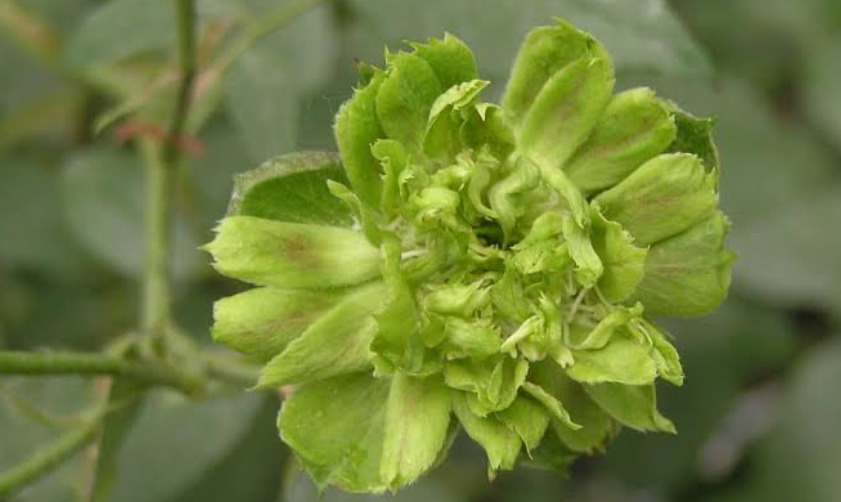
Green roses represent one of the rarest and most genuinely unusual colors in the entire genus, since roses lack the natural pigment pathways needed to produce true green petals, and every rose gardeners and florists call “green” is really achieving the effect through one of a few different biological tricks. The most historically important of these is a phenomenon called phyllody, in which the flower’s petals are replaced entirely by leaf-like green sepals, producing a bloom with no true petals at all, as seen in the famous antique cultivar Rosa chinensis ‘Viridiflora.’ Most other “green” roses achieve their color through a much subtler yellow-green or white-green pigment blend, often shifting in intensity depending on temperature, sunlight, and the age of the individual bloom, which is why so many green-toned roses are marketed as hybrid teas or floribundas with names referencing lime, jade, or mint rather than a pure, saturated green.
Because true green pigment does not exist in roses, this is a genuinely difficult color to breed for, and the pool of well-documented, individually named green rose cultivars is considerably smaller than for any other color in the genus. Where other rose colors can support lists of 40 or 50 named cultivars with clear breeding records, green roses have historically remained a specialty category pursued by only a handful of dedicated hybridizers, including Ralph Moore in the United States, Jack Harkness in England, and more recently Rob Somerfield in New Zealand, each of whom spent years specifically chasing this elusive color. A number of additional green-toned roses circulate in the wholesale cut flower trade under evocative names, but many of these are marketed primarily to florists rather than home gardeners, and detailed, individually published breeding records for them are considerably harder to verify than for widely registered garden cultivars.
Classification-wise, green roses appear across hybrid tea, floribunda, miniature, and shrub types, with the historic Viridiflora technically classified as a China shrub rose due to its sterile, petal-less structure. A mature hybrid tea or shrub-type green rose typically reaches 2 to 5 feet tall, while miniature green roses stay considerably smaller, often under 2 feet, making them a popular choice for containers and small garden spaces. Fragrance varies considerably across the class, with the historic Viridiflora carrying an unusual peppery scent quite different from a typical rose, while many of the modern hybrid tea and floribunda green roses carry only a light, sometimes barely detectable fragrance.
Green roses carry a distinct symbolic meaning apart from the rest of the rose color spectrum, generally associated with renewal, tranquility, fertility, and good fortune, which has made them an increasingly popular novelty choice for gardeners and florists seeking something genuinely different from the traditional red, pink, and white palette. Most modern green roses are hardy across USDA zones 5 through 10, and because this color has proven so difficult to stabilize and breed for garden vigor, some cultivars require slightly more attentive care than their more common counterparts. The following 16 types represent the most well-documented and individually verifiable green roses available to gardeners and floral designers today.
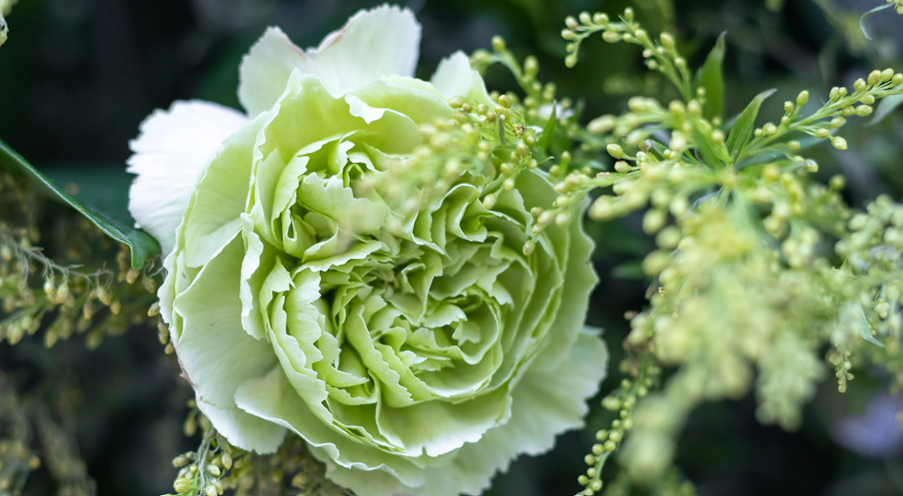
Types of Green Roses
Rosa chinensis ‘Viridiflora’
Rosa chinensis ‘Viridiflora,’ commonly known simply as The Green Rose, is a shrub-type China rose first discovered around 1827 and formally introduced to the public in 1855, making it by far the oldest and most historically significant rose in this entire color category. Rather than true petals, its blooms are composed entirely of layered, narrow, leaf-like green sepals in a phenomenon called phyllody, giving each flower a whimsical, almost artichoke-like appearance rather than the classic rounded rose shape, and because the flower structure lacks reproductive parts, this rose is completely sterile and can only be propagated through cuttings. Its blooms carry an unusual, spicy-peppery fragrance quite unlike typical rose scent, and the bushy, nearly thornless shrub, reaching 3 to 5 feet tall, is hardy across USDA zones 5 through 10 and blooms continuously from late spring through autumn, often taking on bronze or purplish highlights as the season progresses.
Limbo
Limbo is a hybrid tea bred in Germany and introduced in 1999, producing conical buds that open into cup-shaped, greenish-yellow to lemon-green blooms measuring about 3.5 inches across with roughly 50 petals apiece. Its color tends to read as a pale yellow with a distinct green undertone, and in strong summer sun the blooms can fade to nearly white, making its truest green expression most visible during cooler weather or in the earliest stage of the bloom cycle. Growing 2 to 3 feet tall with large, glossy foliage and a light fragrance, Limbo has become a popular choice among florists and collectors specifically seeking a subtler, more understated green than the vivid lime tones found in some other cultivars.
St. Patrick
St. Patrick, also marketed as Limelight in New Zealand, is a hybrid tea bred by Frank Strickland in the United States and introduced in 1996, named in honor of the patron saint of Ireland for its unusual yellow-green coloring. Its large, roughly 4.25-inch blooms shift noticeably with temperature, developing more green in cool weather and more yellow during summer heat, and the vigorous plant, growing about 3 to 4 feet tall with glossy dark green foliage, remains fragrant throughout its bloom cycle. Widely regarded by rosarians as one of the truest and most consistently sea-foam green of any commercially available hybrid tea, St. Patrick has become a favorite among florists specifically for exhibition and festive arrangements celebrating its Irish namesake.
Green Ice
Green Ice is a miniature rose bred by Ralph Moore, widely regarded as the father of the modern miniature rose class, in the United States and introduced in 1971, producing small, flat, icy green blooms accented with bright green stamens. Its flowers open from white to pale pink buds before settling into their characteristic pale mint-green tone, and the compact, glossy-leafed plant, rarely exceeding 18 inches tall, shows notable resistance to common rose pests. Its diminutive size and reliably pale green coloring have made it an enduring favorite for containers, rock gardens, and border edging where a full-sized shrub rose would be impractical.
Greensleeves
Greensleeves is a floribunda bred by Jack Harkness in England and introduced in 1980, producing clustered blooms that open a pale pink-green as buds before maturing into a delicate, soft green shade. Growing over a meter tall in slightly acidic soil, its thorny stems carry glossy, toothed foliage and flower continuously from spring through fall, giving gardeners an unusually long season of green-toned color compared to many other cultivars in this category. Its gentle, understated green tone and reliable cluster production have made it a long-standing favorite among British gardeners seeking a floribunda with genuinely unusual coloring.
Mint Julep
Mint Julep is a hybrid tea bred by Jack Christensen in the United States and introduced in 1983, producing unusual yellow-green blooms with soft pink tinges that evoke the refreshing cocktail for which it is named. Its solitary, 3 to 4 inch flowers appear on a bushy plant with leathery, dark green foliage reaching about a meter tall, and its vibrant, minty coloring has made it a popular choice for gardeners wanting a playful, lively accent among more traditionally colored roses. Well suited to both cutting and garden display, it remains one of the more widely available green-toned hybrid teas from the 1980s era of American rose breeding.
Acropolis
Acropolis is a shrub rose bred by Meilland International in France and introduced in 2002, producing clustered blooms that open mostly orange before fading on the underside to a distinctive greenish-white, creating a striking two-toned effect within a single flower. Growing as a substantial shrub up to two meters tall in full sun, its unusual color transition sets it apart from every other rose on this list, most of which display green from the moment the bud opens rather than developing it gradually as the bloom ages. Its vigorous, sizable growth habit makes it best suited to larger gardens where its dramatic color shift can be fully appreciated from a distance.
Green Diamond
Green Diamond is a miniature rose valued for its exceptionally long vase life and its small, greenish-white blooms, combined with notably strong resistance to common rose diseases compared to many other miniature cultivars. Its compact size, typically under 18 inches, and dependable, repeat-flowering habit have made it a popular choice for container growing and small garden borders where a diminutive plant with unusual coloring is desired.
Wimbledon
Wimbledon is a modern rose variety producing yellowish-green blooms that, while not as consistently or intensely green as the historic Viridiflora, still offer a striking and unusual presence in garden beds and cut flower arrangements. Its subtler, more blended green-yellow tone has made it a popular choice among gardeners who want a green-leaning rose without the more dramatic, structurally unusual appearance of true phyllody-type green roses.
Green Romantica
Green Romantica is a hybrid tea rose noted by growers for its striking, true green petals that stand out dramatically from every other rose in a mixed bed, though it carries only a light fragrance compared to many other hybrid teas. Gardeners who have grown it consistently describe its color as genuinely unlike anything else in their rose collection, and while its scent may be subtle, its visual impact as a conversation-starting specimen plant has made it a popular choice for collectors of unusual rose colors.
Green With Envy
Green With Envy is a floribunda bred by Rob Somerfield of Glenavon Roses in New Zealand and introduced in 2020, the result of nearly three decades of dedicated breeding work specifically aimed at bringing a genuinely green rose to market. Its vibrant lime-green, semi-double blooms deepen in color as they mature and hold up exceptionally well both on the plant and as a cut flower, with a slightly spreading growth habit that contrasts attractively against dark green foliage. As one of the most recently introduced roses in this entire color category, it represents the continued modern pursuit of a more vivid, stable green than earlier 20th-century cultivars were able to achieve.
Green Tea
Green Tea is a pale green rose grown primarily for the florist and wholesale cut flower trade, producing larger, classically structured blooms in a soft, yummy pale green tone that blends easily with other colors in mixed floral arrangements. Its versatile, subtle coloring and classic rose form have made it a popular choice among floral designers building bouquets that call for a gentle, unobtrusive green accent rather than a bold, attention-grabbing statement color.
Mayra’s Green
Mayra’s Green is a beautifully ruffled garden rose from the Mayra’s rose collection, grown primarily for the floral trade, producing a creamy chartreuse color with light blush centers and greener outer petals. Its romantic, naturally blended coloring, softer and more layered than many single-toned green roses, has made it a favorite among floral designers seeking a green rose with a more organic, garden-grown appearance rather than a uniform, saturated hue.
Jade
Jade is a green-toned rose grown primarily for the florist and wholesale cut flower trade, valued for its cool, stone-like green coloring that pairs well with a wide range of other flowers in mixed arrangements. Like many green roses grown specifically for floristry, detailed individual breeding records are less widely published than for garden-registered cultivars, but its consistent, dependable coloring has made it a recognizable name within the cut flower industry.
Super Green
Super Green is widely regarded within the floral trade as the most intensely and consistently green of the commercially available cut flower rose varieties, living up to its emphatic name with a saturated green tone that reads as genuinely green rather than yellow-green or white-green from a distance. Its bold, unambiguous coloring has made it a favorite among florists specifically seeking the most vivid green available for arrangements, bouquets, and event floristry.
Lemonade
Lemonade is a lemony-lime colored rose grown primarily for the cut flower trade, producing compact blooms with distinctive angular petals that give the flower a slightly geometric, modern appearance compared to the softer, rounder form typical of most roses. Its bright, citrus-toned coloring pairs particularly well with berry-colored flowers and other bright summer blooms, making it a popular seasonal choice among floral designers building warm-weather arrangements.