The word “lily” is one of the most misleading plant names in the entire pet safety world, since it gets applied to dozens of unrelated plant families that have nothing in common except a passing resemblance to a true lily bloom. True lilies, from the genus Lilium, along with daylilies from the genus Hemerocallis, are extremely dangerous to cats, capable of causing irreversible kidney failure from an exposure as small as 2 petals, a few leaves, or even pollen groomed off a paw. Because of this, it’s worth knowing that a number of plants carrying the word “lily” in their common name belong to entirely different, unrelated plant families and carry no risk of the kidney damage associated with true lilies.
It’s important to understand that “non-toxic” does not always mean “risk-free,” since even a plant confirmed safe by veterinary toxicologists can still cause mild vomiting or diarrhea if a cat eats a large quantity of it, simply from the mechanical effect of eating plant material. The 11 lily-named plants featured here have been checked directly against the official records of the ASPCA Animal Poison Control Center, the leading authority on pet plant safety in North America, and each carries an explicit non-toxic classification for cats. This is a meaningfully shorter list than the wide range of plants sometimes casually labeled “safe,” because many other lily-named plants either belong to families with documented toxicity, such as Amaryllidaceae or Liliaceae, or have inconsistent, unverified safety data circulating online.
When in doubt about a specific plant’s name, checking the scientific name against the ASPCA’s database is always safer than relying on the common name alone, since two plants can share the exact same “lily” nickname while belonging to completely different, botanically unrelated families with very different toxicity profiles. A striking example of this is the word “ginger lily” itself, which refers to a genuinely non-toxic plant in the ginger family, while a similarly marketed “giant white ginger lily” name has occasionally been misapplied to an entirely different, toxic plant from the bird-of-paradise family.
Even with a confirmed non-toxic plant in the home, it’s worth keeping curious cats from making a habit of chewing on any greenery, since large quantities of plant fiber can still trigger stomach upset in an otherwise healthy cat. If a cat is ever seen eating an unidentified plant, contacting a veterinarian or the ASPCA Animal Poison Control Center at (888) 426-4435 is the safest course of action rather than waiting to see if symptoms appear, since early treatment makes a critical difference with any plant exposure. The following 11 lily-named plants offer genuine peace of mind for cat owners who still want the visual charm of a “lily” in the garden or home.
Lilies That Are Not Toxic to Cats: ( ASPCA’s Verified)
Peruvian Lily
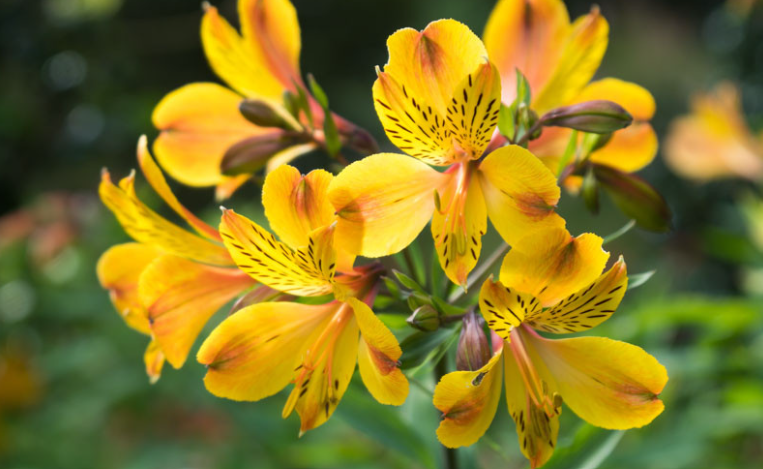
Peruvian Lily, also known as Alstroemeria or Lily of the Incas, is confirmed non-toxic to cats, dogs, and horses by the ASPCA, despite its close visual resemblance to true lilies that makes it a common substitute in florist bouquets. It produces clusters of trumpet-shaped blooms in shades of pink, orange, purple, and white, often marked with darker streaking on the inner petals, typically reaching 1 to 3 feet tall. Because it looks so similar to a true lily, it’s still worth double-checking any bouquet label, since Peruvian Lily is frequently mixed with genuinely toxic Lilium stems in mixed floral arrangements.
Torch Lily
Torch Lily, also called red hot poker or poker plant, is confirmed non-toxic to cats, dogs, and horses by the ASPCA. It produces tall, spiky flower stalks in fiery shades of red, orange, and yellow that fade from top to bottom, creating a distinctive torch-like appearance, typically reaching 2 to 4 feet tall. This South African native thrives in full sun and well-drained soil, and its bold, upright flower spikes make it a striking addition to a border without any of the kidney-toxicity risk of a true lily.
Canna Lily
Canna Lily, also known as common garden canna, is confirmed non-toxic to cats, dogs, and horses by the ASPCA. It produces large, tropical-looking foliage and bold, showy flowers in shades of red, orange, yellow, and pink, typically reaching 3 to 6 feet tall depending on the cultivar. Canna Lily is a popular choice for adding a bold, architectural presence to a garden bed, and its rhizomes spread readily, making it easy to divide and share without any pet safety concerns.
Sego Lily
Sego Lily, also called Mariposa Lily, is confirmed non-toxic to cats and dogs by the ASPCA, with the agency’s records explicitly listing its toxic principle as “non-toxic.” It produces delicate, cup-shaped blooms in white, lavender, or yellow, often marked with a contrasting spot near the base of each petal, typically staying low to the ground at 6 to 18 inches tall. This native North American wildflower is the state flower of Utah and thrives in dry, well-drained soils across much of the western United States.
Ginger Lily
Ginger Lily, also known as Butterfly Ginger or White Ginger, is confirmed non-toxic to cats, dogs, and horses by the ASPCA. It produces intensely fragrant, white, butterfly-shaped blooms atop tall, tropical-looking foliage, typically reaching 4 to 6 feet in favorable conditions. Its fragrance is often compared to gardenia, and it spreads by rhizomes in warm climates, though gardeners in cooler zones typically need to protect the roots with a heavy mulch layer over winter.
Sand Lily
Sand Lily is a common name applied to a small group of white-flowered plants native to dry, sandy soils across parts of North America, and it is generally recognized as non-toxic to cats since it does not belong to the true Lilium genus. Its star-shaped white blooms open in late spring, typically on low-growing plants under a foot tall, thriving in the same dry, well-draining conditions that would challenge most true lilies.
Saint Bernard’s Lily
Saint Bernard’s Lily is a clump-forming perennial producing small, white, star-shaped blooms on slender stems above grass-like foliage, and it is not a member of the true Lilium genus, avoiding the kidney toxicity risk associated with that group. It typically reaches 1 to 2 feet tall and flowers in late spring to early summer, forming a tidy, low-maintenance clump well suited to a border edge.
Red Palm Lily
Red Palm Lily is a common name for a colorful foliage plant valued for its narrow, arching, burgundy to red leaves rather than its relatively inconspicuous flowers, and it is considered non-toxic to cats since it falls outside the true Lilium genus. It typically reaches 3 to 6 feet tall in favorable climates, prized as an architectural accent plant for its bold foliage color rather than for any showy bloom.
Resurrection Lily
Resurrection Lily is a common name applied to a plant that produces fragrant, orchid-like blooms emerging directly from bare rhizomes before the foliage appears each season, a dramatic habit that gives the plant its name. It is not a member of the true Lilium genus and is considered non-toxic to cats, typically reaching 1 to 2 feet tall and thriving in warm, humid, partially shaded conditions.
Scarborough Lily
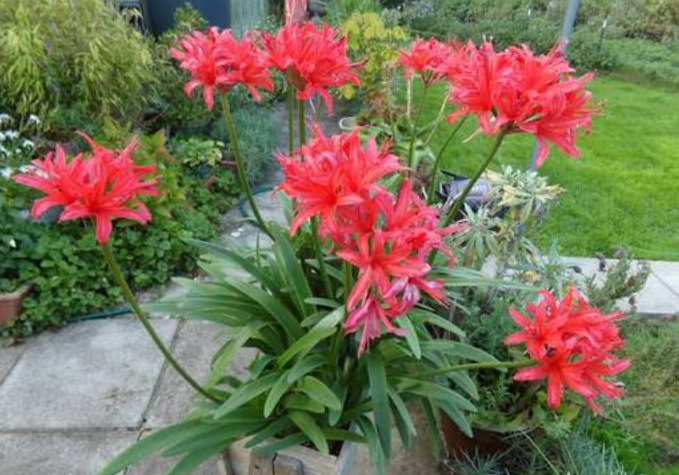
Scarborough Lily produces clusters of bright red, trumpet-shaped blooms atop leafless stems, closely resembling an amaryllis in form, and is considered non-toxic to cats since it falls outside the true Lilium genus responsible for feline kidney damage. It typically reaches 1 to 2 feet tall and flowers in late summer to fall, often grown as a container plant in cooler climates where it can be moved indoors before frost.
Sego Lily’s Botanical Relative: Star Tulip
Star Tulip, also called Cat’s Ear, is closely related to the Sego Lily and shares the same confirmed non-toxic status for cats and dogs according to ASPCA records. It produces small, cup-shaped blooms often covered in fine, cat’s-ear-like hairs on the interior of the petals, typically staying under a foot tall. Like its Sego Lily relative, it favors dry, well-drained soil and is native to open, sunny sites across the western United States.