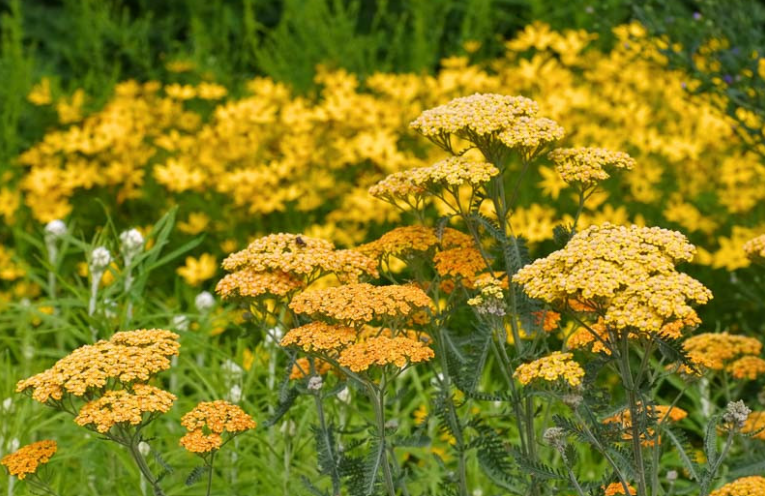
Yarrow is a hardy, herbaceous perennial plant belonging to the daisy family, Asteraceae, and is one of the most widely distributed wildflowers in the world, found growing naturally across Europe, Asia, and North America in meadows, roadsides, grasslands, and open woodland edges. The genus Achillea comprises around 85 species, but it is Achillea millefolium — the common yarrow — that is most widely known and grown, both as a garden ornamental and as a plant with a long and rich history of medicinal, culinary, and cultural use stretching back thousands of years across many civilisations.
The plant takes its Latin genus name from the Greek hero Achilles, who, according to legend, used yarrow to staunch the bleeding wounds of his soldiers on the battlefield — a tradition rooted in the plant’s well-documented astringent and wound-healing properties that herbalists have relied upon for millennia. Its species name, millefolium, meaning “a thousand leaves,” refers to the finely divided, feathery, fern-like foliage that is one of yarrow’s most distinctive and recognisable characteristics. This aromatic foliage releases a sharp, pleasantly medicinal scent when bruised or crushed and forms attractive, spreading clumps at ground level even when the plant is not in flower.
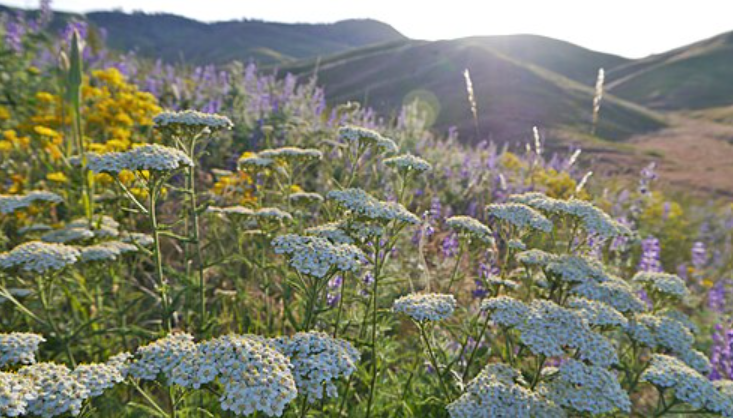
In the garden, yarrow is celebrated above all for its flat-topped flower clusters, known botanically as corymbs, which are carried on stiff, upright stems above the feathery foliage from early summer well into autumn. Wild yarrow bears white or occasionally pale pink flowers, but modern garden cultivars have extended the colour palette dramatically to include vivid shades of red, orange, yellow, salmon, lilac, and deep rose-pink. The flat, plate-like flower heads are not only visually striking and long-lasting on the plant but are also excellent as cut flowers, both fresh and dried, retaining their colour and form exceptionally well when dried for indoor arrangements.
Ecologically, yarrow is one of the most valuable plants that a gardener can grow for wildlife, its open, nectar-rich flower heads being accessible to an exceptionally wide range of insects including bees, butterflies, hoverflies, beetles, and many other beneficial species. It is a recognised companion plant in organic gardens and permaculture systems, where it is grown for its ability to attract predatory and parasitic insects that help control pest populations in neighbouring plants. Its deep, extensive root system also draws up minerals from the subsoil, and when used as a compost activator the leaves are said to accelerate the decomposition of organic material significantly.
Beyond the garden, yarrow has accumulated one of the longest and most diverse records of human use of any plant in the Northern Hemisphere. It has been used in traditional herbal medicine as a fever reducer, digestive tonic, and wound treatment; in the brewing of traditional ales before hops became widespread; as a divination tool in the ancient Chinese I Ching; and as a symbolic plant in the wedding traditions of several European cultures. Today, modern herbalism continues to value yarrow for its anti-inflammatory and antimicrobial properties, and it is a common ingredient in herbal teas, tinctures, and skin care formulations, cementing its status as one of the most remarkable and multi-faceted plants in the entire botanical world.
How to Grow & Care For Yarrow
Choosing the Right Location
Yarrow is a sun-worshipping plant that demands a position in full sun for the best results, requiring a minimum of six hours of direct sunlight per day to develop strong, upright stems and produce an abundant floral display. In shady positions, yarrow becomes leggy and weak, producing elongated, floppy stems that require staking, and flowering is dramatically reduced.
Choose an open, unobstructed position where the plant can bask in sunlight throughout the day, and where air circulates freely around the foliage to reduce the risk of the powdery mildew that can afflict plants grown in still, humid conditions. Yarrow is an excellent choice for hot, dry slopes, gravel gardens, prairie-style plantings, and sunny borders where conditions are challenging for less robust plants.
Soil Requirements
One of yarrow’s greatest virtues as a garden plant is its remarkable tolerance of poor, infertile soils in which many other ornamentals would struggle to survive. It thrives in well-drained to dry soils and in fact performs significantly better in lean conditions than in rich, heavily fertilised soils, where it tends to produce lush, over-large growth that becomes floppy and requires staking.
The ideal soil is a light to medium loam or sandy soil with excellent drainage and only moderate fertility. Yarrow tolerates both mildly acidic and mildly alkaline conditions and is not particularly fussy about pH, making it adaptable to the vast majority of garden soils without any special amendment or adjustment being necessary.
Planting
Yarrow can be planted in spring or autumn from container-grown plants purchased at garden centres, or established from seed, division, or cuttings as described later. When planting from containers, dig a hole roughly twice the width of the root ball and at the same depth, so the crown of the plant sits at soil level rather than being buried.
Backfill with the excavated soil — there is no need to enrich it with compost unless the soil is extremely poor — and firm gently around the roots before watering in well. Space plants approximately 45 to 60 cm apart to allow for their natural spreading habit, as established yarrow will gradually expand outward from the centre and fill the available space over two to three seasons. Avoid planting in wet, waterlogged areas, as yarrow’s roots are highly susceptible to rot in poorly drained conditions.
Watering
Once established in the garden, yarrow is one of the most drought-tolerant of all flowering perennials, capable of surviving extended dry periods without supplementary irrigation thanks to its deep, fibrous root system that can access moisture well below the soil surface. Newly planted yarrow, however, requires regular watering throughout its first growing season while its root system is establishing, and should be watered deeply once or twice a week during dry spells to encourage downward root development.
After the first full season in the ground, supplementary watering can be reduced dramatically and in most temperate climates can be discontinued almost entirely. In containers, yarrow requires more regular watering than in the open ground, as pots dry out far more quickly, but even in containers the soil should be allowed to dry out partially between waterings to avoid the waterlogging that yarrow particularly dislikes.
Feeding and Fertilising
Yarrow is one of those admirable plants that actually performs better when it is not over-fed, and heavy fertilisation — particularly with nitrogen-rich products — is one of the most common mistakes made by well-intentioned gardeners. Excessive feeding produces abundant leafy growth that is weak, lax, and prone to flopping, and can significantly reduce the intensity of the flower colour and the number of blooms produced.
In most garden soils of average fertility, yarrow requires no supplementary fertilisation whatsoever and will thrive on the natural resources available to it. In genuinely poor, impoverished soils, a light application of a balanced, slow-release granular fertiliser in early spring is sufficient to support healthy growth and flowering without promoting excessive soft growth.
Mulching
While yarrow does not demand mulching in the way that moisture-loving plants do, a light application of grit or fine gravel mulch around the base of the plant in spring can be highly beneficial, particularly in heavier soils. A gravel mulch improves surface drainage around the crown of the plant, which is the area most vulnerable to winter rot, and also reflects warmth back onto the plant in cooler climates.
Organic mulches such as bark chips or compost, while excellent for many plants, should be used cautiously around yarrow as they can retain moisture around the crown and promote the kind of lush, overly rich growing conditions that this plant does not appreciate. In gravel gardens and dry borders, yarrow can be left entirely unmulched and will thrive perfectly well with no mulch at all.
Pruning and Deadheading
Deadheading spent flower clusters promptly after they fade is one of the most effective ways to extend yarrow’s already generous flowering season, as removing the old flower heads encourages the plant to produce new stems and blooms rather than diverting energy into seed production. Use sharp, clean scissors or secateurs to cut the spent stems back to a pair of healthy leaves or to a visible new bud lower down the stem.
Many gardeners choose to leave the last flush of flower heads in place through autumn and winter, as the dried seed heads provide architectural interest in the winter garden and are a valuable food source for seed-eating birds. In late winter or very early spring, before new growth emerges from the base, cut all the old stems back hard to within a few centimetres of the ground to make way for the fresh new season’s growth.
Dividing Established Clumps
Yarrow spreads steadily outward from the centre by means of creeping rhizomes and can form sizeable clumps over several years. As the clumps age, the centre tends to die out and become woody and unproductive, while the younger, more vigorous growth is concentrated around the outer edges — a phenomenon common to many clump-forming perennials.
Dividing established yarrow clumps every two to three years in early spring or early autumn is the most effective way to maintain the plant’s vigour and flowering performance, rejuvenate ageing specimens, and produce new plants for planting elsewhere in the garden. To divide, dig up the entire clump, discard the exhausted central portion, and replant the vigorous outer sections at the appropriate spacing, watering in well and keeping them moist until they are established.
Propagation from Seed
Yarrow is readily propagated from seed, making it an economical way to produce large numbers of plants for naturalising in meadow plantings or filling large borders. Seeds can be sown in early spring under glass at a temperature of around 18–21°C, scattered thinly on the surface of a moist, well-drained seed compost and left uncovered or covered only very lightly with vermiculite as they need light to germinate. Germination typically occurs within ten to fourteen days.
Once seedlings are large enough to handle, prick them out into individual small pots and grow on in a cool, light position before hardening off and planting out after the last frost date. It is worth noting that named cultivars with specific flower colours will not come true from seed and may produce variable offspring, so vegetative propagation methods are preferable for maintaining the characteristics of particular cultivars.
Propagation from Cuttings
Basal cuttings taken from yarrow in mid to late spring, when the new shoots are around 8 to 10 cm tall and still relatively soft, provide an effective vegetative propagation method that preserves the characteristics of named cultivars. Select healthy, non-flowering shoots arising from the base of the plant, cut them cleanly just below a leaf node, remove the lower leaves, and insert them into small pots of moist, free-draining cutting compost.
Place the pots in a warm, sheltered spot — a cold frame or windowsill is ideal — and keep the compost just moist, avoiding over-watering. Roots typically develop within three to four weeks, after which the young plants can be potted on into slightly larger containers and grown on before being planted into their final garden positions in autumn or the following spring.
Managing Spread
Yarrow’s spreading, colonising habit is one of its most useful qualities in naturalistic and wildlife garden settings, but in more formal or densely planted borders it can become invasive if left unchecked, spreading into neighbouring plants and self-seeding prolifically. To keep yarrow within its allotted space, regular division every few years is the most effective long-term management strategy, as described above.
Deadheading before seed is set will dramatically reduce self-seeding, which is particularly important with garden cultivars whose seedlings may revert to the less ornamental wild white form and outcompete the parent plants over time. Inserting a physical root barrier in the soil around yarrow plants in smaller borders can also help restrict the spread of the creeping rhizomes without the need for frequent intervention.
Staking
In ideal growing conditions — full sun, lean soil, and good air circulation — yarrow produces naturally stiff, upright stems that require no staking whatsoever. However, in richer soils, partial shade, or exposed and windy positions, the stems can become tall, lax, and prone to flopping outward in a manner that looks untidy and can smother neighbouring plants.
If staking is needed, the most unobtrusive method is to use twiggy pea sticks pushed into the ground around the plant in early spring before the stems reach their full height, allowing the growth to grow up through the natural network of twigs and conceal the support entirely as the season progresses. Alternatively, modern wire plant supports of the hoop or linking-ring type work well and can be adjusted as growth develops.
Pests and Diseases
Yarrow is a robustly healthy plant that suffers from relatively few serious pest or disease problems, which contributes greatly to its reputation as a low-maintenance garden perennial. Powdery mildew is the most commonly encountered disease, producing a white, powdery coating on the leaves and stems during warm, dry summers, particularly when plants are grown in overly fertile soil or insufficient sunlight.
Improving air circulation, avoiding overhead watering, and growing yarrow in the lean, sunny conditions it prefers are the best preventive measures. Aphids can occasionally colonise the soft new growth in spring but are rarely present in sufficient numbers to cause lasting harm and are usually kept in check by natural predators.
Spittlebugs — the frothy, white, sap-sucking insects also known as froghoppers — occasionally appear on yarrow stems in early summer but cause only minor cosmetic damage and need no treatment. In very wet seasons or in poorly drained soils, crown and root rot caused by various fungal pathogens can be a serious problem, but this is almost entirely preventable by ensuring excellent drainage at the planting site.
Companion Planting
Yarrow is one of the most beneficial companion plants in the garden, and its value extends well beyond its own ornamental contribution. Its flat-topped flower heads provide a landing platform perfectly suited to a wide range of beneficial insects including parasitic wasps, hoverflies, and predatory beetles that prey upon common garden pests such as aphids, caterpillars, and whitefly — making yarrow an invaluable ally in reducing chemical pesticide use.
In the vegetable garden, it is traditionally grown near crops vulnerable to aphid attack, and its presence is thought to improve the health and productivity of neighbouring plants by attracting the predatory insects that keep pest populations in check. Ornamentally, yarrow associates beautifully with ornamental grasses, salvias, echinacea, agastache, and other drought-tolerant perennials in prairie and meadow-style plantings, where its flat flower heads provide a horizontal contrast to the vertical forms of its companions.
Winter Care and Seasonal Maintenance
Yarrow is a fully hardy perennial in most temperate climates, tolerating frosts well into negative double figures without requiring any protective measures whatsoever. As the season ends and temperatures drop, the foliage dies back naturally and the plant enters a period of dormancy in which its energy is stored in the root system and basal rosette of leaves.
Many gardeners choose to leave the old flower stems and foliage in place through winter, as they provide valuable habitat and food for insects and birds and also protect the crown of the plant from the worst of the winter weather. In late winter or very early spring — typically February or March in the Northern Hemisphere — all the old growth should be cut back hard to ground level to allow the vigorous new season’s growth to emerge cleanly and unimpeded.
In gardens with particularly heavy or wet soils, applying a light dressing of coarse grit around the crown in autumn can provide additional protection against the winter rot that wet, cold conditions can sometimes cause.