Plants that repel mosquitoes typically produce strong natural compounds known as essential oils, which interfere with the insects’ ability to locate humans. Mosquitoes rely heavily on scent—especially carbon dioxide and body odors—to find hosts. When plants release intense aromas, they can mask or disrupt these cues, making it harder for mosquitoes to detect nearby people.
Another important property is the presence of bioactive chemicals such as citronellal, eugenol, linalool, and geraniol. These compounds are naturally found in certain plants and act as deterrents by irritating or confusing mosquitoes’ sensory receptors. Some of these substances are even extracted and used in commercial insect repellents.
The texture and structure of certain plants can also play a role. For example, plants with hairy or waxy leaves may be less attractive landing spots for mosquitoes. In addition, when leaves are crushed or brushed against, they often release stronger bursts of scent, increasing their repellent effect in the immediate area.
Environmental influence matters as well. Plants that repel mosquitoes tend to perform best when placed in warm, sunny locations, where their essential oil production is highest. However, it’s important to note that most plants do not repel mosquitoes strongly enough on their own unless they are handled, crushed, or concentrated in large numbers.
Common mosquito-repelling plants include herbs and ornamentals like citronella grass, lavender, basil, mint, rosemary, and marigolds. These plants are often used in gardens, patios, or near windows to help reduce mosquito presence.
Plant that Keeps Mosquitoes Away
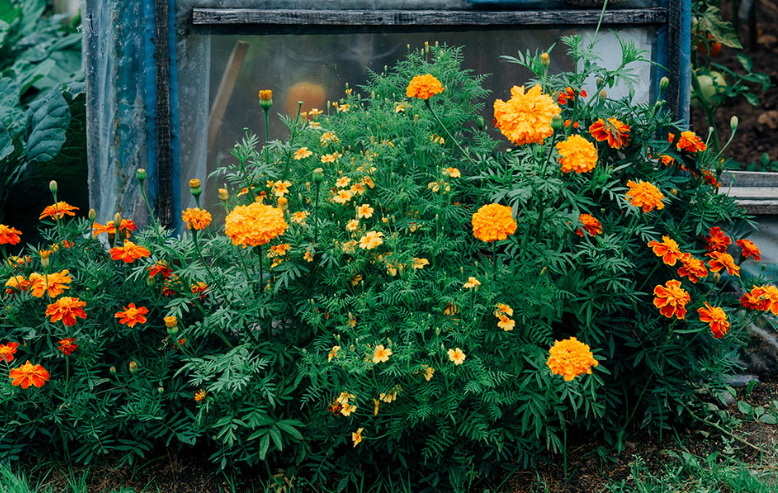
Mexican Marigold
Tagetes erecta produces a substantially more pungent, resinous scent than its compact garden cousins, owing to higher concentrations of limonene and ocimene in the foliage. Companion planting it alongside vegetables also suppresses soil nematodes, broadening its utility well beyond insect deterrence. Its deep orange and gold blooms are a visual anchor in summer and autumn borders.
Lemon Verbena
Few plants rival lemon verbena for sheer citrus intensity — its leaves contain citral at concentrations that make the fragrance almost overwhelming at close range. This same intensity translates directly to repellency; mosquitoes register the citral signal as a chemical avoidance cue. In temperate climates, bringing potted plants indoors over winter keeps them productive year after year.
Tea Tree
Terpinen-4-ol, the primary bioactive compound in tea tree, has demonstrated broad-spectrum antimicrobial and insect-repellent properties in numerous studies. The shrub emits its sharp, medicinal, camphor-adjacent fragrance constantly — more so on hot days when leaf surface temperatures rise — and the surrounding air takes on a character that mosquitoes instinctively avoid.
Neem Tree
Azadirachtin, extracted from neem seeds, is one of the most complex natural insecticides known — it interferes with mosquito hormone systems, disrupting feeding, reproduction, and larval development simultaneously. As a living shade tree, the neem broadcasts limonoids and other volatile compounds from its canopy, providing area-wide protection in tropical and subtropical landscapes.
Citronella Grass
The original source of citronella oil, this tall, clumping grass contains citronellal and geraniol — compounds that overpower the carbon dioxide and body odors mosquitoes track. A few clumps positioned around an outdoor seating area form a natural aromatic perimeter that keeps biting insects disoriented and at a distance.
Oswego Tea
Monarda didyma, the red-flowered counterpart to wild bergamot, concentrates thymol and other phenolic compounds in its square-stemmed, mint-family foliage. Historically used by Oswego people and early American settlers as both a beverage herb and a medicinal plant, it also serves as a reliable insect deterrent in moist, partly shaded spots where many repellent plants struggle to grow.
Lavender
Behind lavender’s beloved purple blooms lies linalool, a compound that scrambles the sensory receptors mosquitoes use to locate warm-blooded hosts. Drought-tolerant and low-maintenance, it slots beautifully into garden borders, and a handful of dried sprigs hung near an open window acts as a passive indoor deterrent as well.
Marigold
Marigolds harbor pyrethrum — the same compound extracted for commercial insecticides — within their petals and foliage. Their distinctive pungent odor, which many humans find sharp and earthy, is deeply off-putting to mosquitoes, aphids, and whiteflies alike. Lining them along a fence or pathway creates a fragrant defensive edge.
Stone Root
Native to shaded Appalachian woodlands, Collinsonia canadensis produces a turpentine-lemon fragrance from its large, coarse leaves that mosquitoes reliably avoid. It thrives in exactly the kind of moist, dappled conditions where mosquitoes tend to breed and rest, positioning it as a particularly well-suited deterrent plant for humid, shaded garden corners.
Catnip
Iowa State University researchers discovered that nepetalactone, the volatile oil in catnip, outperforms DEET in laboratory repellency tests by a significant margin. The compound disperses readily into surrounding air without any bruising or burning required, essentially radiating a chemical signal that mosquitoes are hardwired to flee from.
Rosemary
Dense, needle-like foliage packed with camphor and alpha-pinene gives rosemary its sharp, resinous character — one that mosquitoes find intolerable. In hot weather, the oils evaporate naturally into the surrounding air. Tossing a few fresh stems onto a charcoal grill amplifies this effect dramatically during outdoor gatherings.
Wild Bergamot
Monarda fistulosa carries thymol and carvacrol in its foliage — the same terpenes that make thyme an effective repellent — but delivers them in a more ornamental prairie plant package. It tolerates poor soils, handles drought once rooted, and hosts a remarkable diversity of native bees and butterflies while simultaneously driving away mosquitoes.
Basil
Few culinary herbs release repellent compounds passively, but basil does exactly that — no bruising necessary. Estragole and eugenol emanate continuously from its broad leaves, particularly on warm days when heat accelerates their volatilization. Keeping a pot on an outdoor dining table serves both the kitchen and the evening air.
Peppermint
The sharp, cooling menthol in peppermint overwhelms the olfactory system of mosquitoes and various other insects. Fresh leaves can be rubbed directly onto exposed skin for short-term personal protection, and the plant spreads with such enthusiasm that containing it in a pot prevents it from overtaking surrounding beds.
Lemon Balm
Citronellal concentrations in lemon balm rival those found in dedicated repellent plants, yet this herb is far easier to establish in shaded or damp spots where citronella grass struggles. It self-seeds generously, spreads into ground cover over time, and its crushed leaves release a burst of sharp citrus that sends mosquitoes retreating.
Lemongrass
Lemongrass is the agricultural source from which commercial citronella oil is distilled, putting it at the top tier of natural repellency. Its towering, architectural clumps suit tropical and subtropical gardens particularly well, and slicing a stalk open near a seating area releases a concentrated wave of insect-deterring fragrance.
Pitcher Sage
Lepechinia calycina, a California native shrub, exhales a powerful sage-turpentine fragrance from its woolly leaves that saturates the surrounding air on warm afternoons. Unlike common culinary sage, pitcher sage grows into a substantial woody shrub that projects its repellent chemistry across a wide area, requiring no intervention beyond the occasional dry-season trim to keep it productive and shapely.
Eucalyptus
Oil of lemon eucalyptus (OLE) holds the rare distinction of being CDC-endorsed as a plant-based mosquito repellent with documented efficacy. The tree emits cineole and citronellal from its bark and foliage continuously, and in warm climates where it grows tall and fast, an entire yard can benefit from its ambient output.
Snowbrush
Ceanothus velutinus fixes nitrogen in soil while simultaneously releasing nitrogen-rich volatile compounds from its waxy leaves that repel mosquitoes and other flying insects. In the wild it colonizes forest clearings and disturbed slopes; in the garden it serves as a dense, low-maintenance shrub that works as a repellent hedge along borders and property edges.
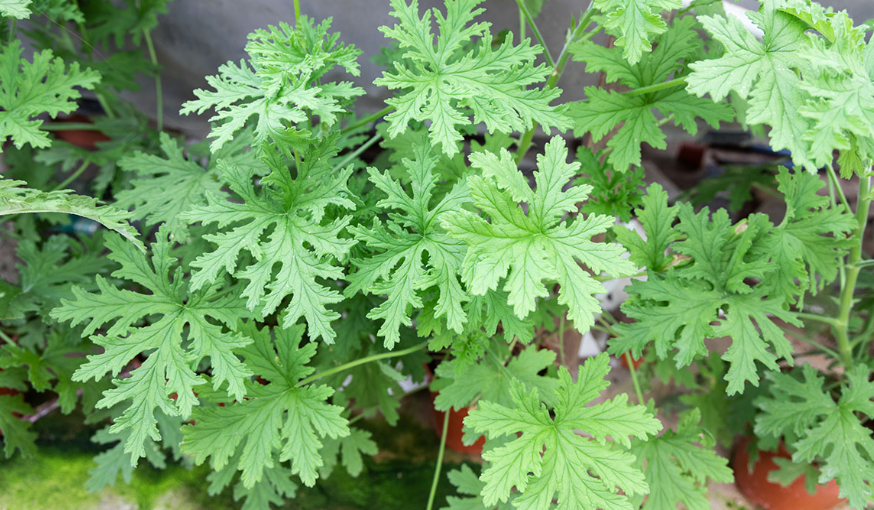
Scented Geranium
Often sold under the name “mosquito plant,” Pelargonium citrosum packs citronellol and geraniol into its ruffled leaves. The scent only becomes fully apparent when the leaves are lightly touched, releasing a lemon-rose fragrance pleasant to humans but chemically hostile to mosquitoes. Containers near doorways and patios position it where it works best.
Pennyroyal
One of the most aggressive insect deterrents in the entire mint family, pennyroyal has been documented in repellent use since ancient Rome. Its sharp, medicinal fragrance fills a wide radius without any physical intervention. Worth noting: pulegone, its active compound, is toxic to cats and dogs, so placement should account for any pets in the space.
Sage
Smoke is sage’s strongest weapon — dried bundles burned slowly release a thick cloud of volatile terpenes that drive mosquitoes away from the immediate area for extended periods. As a living shrub, the silvery-green foliage still contributes a steady low-level deterrent, particularly on warm afternoons when sun heats the leaf surface.
Lemon-Scented Gum
Corymbia citriodora is the tree from which CDC-approved oil of lemon eucalyptus is commercially derived. Citronellal dominates its leaf chemistry, evaporating into the surrounding air in quantities large enough to confuse and repel mosquitoes across a meaningful radius. In frost-free climates, it grows into a tall, elegantly mottled-bark specimen tree with functional year-round value.
Thyme
Research published in the Journal of the American Mosquito Control Association found that burning thyme leaves provided roughly 85% protection against biting insects for up to 90 minutes. Thymol and carvacrol are the active compounds, and as a ground-hugging perennial, thyme also releases them underfoot when stepped on along garden paths.
Bee Balm
Its common name suggests a friendly, pollinator-welcoming herb — and for bees and butterflies, it absolutely is. For mosquitoes, however, the oregano-like compounds in bee balm’s leaves serve as a chemical repellent. Rubbing a fresh leaf between the fingers and applying it to the forearms offers a simple, fragrant field solution on warm evenings.
Ornamental Allium
The sulfur chemistry that gives the entire allium family its pungent edge extends well beyond the kitchen garden. Ornamental alliums, with their striking globe-shaped violet flower heads, push these volatile sulfur compounds into the surrounding air as they grow. They also suppress soil-dwelling pests, giving them dual value in a well-planned garden bed.
Garlic
Allicin, the sulfur compound responsible for garlic’s characteristic sharpness, is deeply repellent to mosquitoes. Some gardeners dilute garlic juice in water and spray it across outdoor surfaces as a temporary barrier treatment. Consuming garlic regularly also causes trace sulfur compounds to be secreted through sweat, offering a subtle degree of personal protection.
Chrysanthemum
Chrysanthemums synthesize pyrethrin — a natural insecticidal compound so potent that it forms the chemical backbone of many commercial bug sprays. Growing them in garden borders essentially establishes a biological insecticide source in the yard. Dried flower heads retain their repellent properties and can be used as slow-burning coils or sachets.
Lantana
Beneath its clusters of vivid multi-colored flowers, lantana contains linalool and various other volatile aromatic compounds that mosquitoes strongly avoid. Studies in tropical field conditions have confirmed measurable reductions in mosquito activity near lantana-dense areas. In warm climates it spreads readily, requiring occasional management but rewarding little effort with year-round blooms.
Pitcher Plant
Rather than chemically deterring mosquitoes, pitcher plants eliminate them through entrapment. Their deep, liquid-filled tubes lure insects — including adult mosquitoes and larvae — inside, where they are digested slowly. In a boggy garden corner or container water feature, a cluster of these carnivorous plants actively reduces the local mosquito population over time.
Venus Flytrap
The Venus flytrap operates on a hair-trigger mechanical system that snaps shut around any small insect that brushes against its sensitive inner lobes twice within 20 seconds. Mosquitoes that venture too close become a nitrogen source rather than a nuisance. Though small in scale, a grouping of these plants near a windowsill or porch can intercept a surprising number of insects.
Wormwood
Absinthin, thujone, and several other bitter sesquiterpene compounds concentrated in wormwood’s silvery foliage are highly noxious to most insects. The plant emits these compounds into the air even when undisturbed, and its ornamental value — particularly the feathery silver-grey texture of Artemisia absinthium — means it earns its place visually as well as functionally.
Feverfew
Parthenolide and camphor give feverfew its bitterish, chrysanthemum-like aroma that insects reliably avoid. Self-seeding freely and tolerating a range of soil conditions, it naturalizes along pathways and in neglected corners where it works quietly year after year. The white daisy-like flowers also make it one of the more ornamentally appealing herbs in this category.
Clove
Eugenol — the dominant compound in clove oil — ranks among the most studied natural insect repellents, with demonstrated efficacy against Aedes aegypti, the primary dengue and yellow fever vector. A clove shrub growing in a tropical garden continuously releases this compound into the surrounding microclimate, and dried cloves in bowls near outdoor furniture reinforce the effect.
Floss Flower
Ageratum produces coumarin, a chemical found in many commercial mosquito repellent formulations, directly within its soft, powder-puff blooms. Though the leaves should never be applied to skin due to concentrated coumarin levels, simply cultivating it in garden beds generates a passive chemical deterrent that reduces mosquito activity in the surrounding zone.
American Beautyberry
Callicarpenal and intermedeol — two compounds found in the crushed leaves of this native shrub — showed repellency comparable to DEET in USDA Agricultural Research Service trials. Beyond its insect-deterring chemistry, beautyberry produces spectacular clusters of iridescent purple berries in autumn, earning it a place in the landscape purely on aesthetic grounds as well.
Nodding Onion
This native wildflower carries the sulfurous chemistry of the broader allium family in a delicate, low-growing form. Its drooping rose-pink blooms appear in summer while the foliage continuously emits the soft sulfur compounds that deter biting insects. Drought-resistant and largely self-sufficient once established, it thrives in wild or naturalized garden areas with minimal attention.
Tansy
Thujone, the volatile terpene in tansy, disrupts the nervous systems of many insects at the neurological level — which explains its centuries-long history as a household insect deterrent across Northern Europe. The bright button-yellow flowers are visually cheerful, but the plant spreads aggressively through both seed and rhizome, making container cultivation the wiser approach in most gardens.