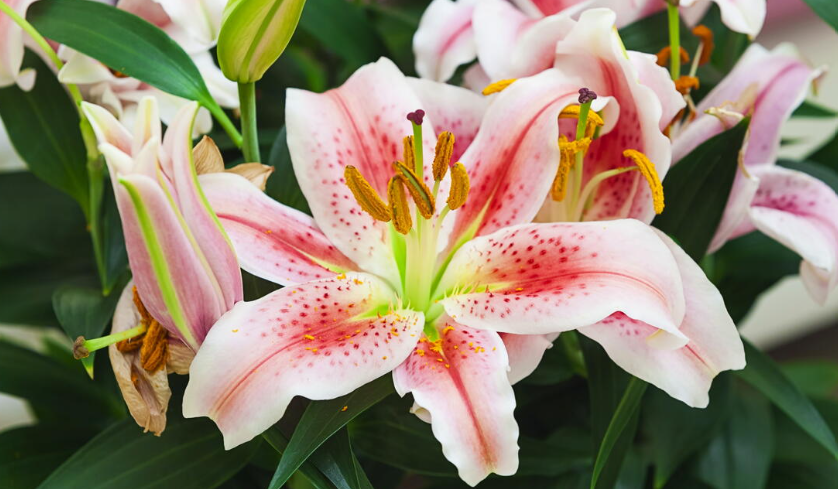
Most true lilies are sun worshippers, but a meaningful number of species and hybrids have adapted to life beneath a woodland canopy or along the north side of a building, making shade gardening with lilies more achievable than many gardeners realize. Generally speaking, a lily described as shade tolerant still needs 3 to 4 hours of direct or dappled sunlight daily, most often in the morning, with protection from harsh afternoon rays being the real key to success rather than total darkness. The Martagon division, in particular, has built its entire reputation on this trait, with most Martagon types reaching 3 to 6 feet tall and performing best in partial shade rather than the full sun that Asiatic and Oriental types demand.
Many of the true lily species that tolerate shade are native woodland plants, evolved to grow beneath deciduous trees that leaf out after the bulb has already begun its spring growth cycle, giving the plant a head start before the canopy closes overhead. These native types are typically hardy across USDA zones 3 through 9 and can take 2 to 3 years to fully establish and reach peak flowering after planting, a slower timeline than the 1-year establishment common among sun-loving Asiatic hybrids. Once settled, however, many shade-tolerant lilies prove remarkably long-lived, with some Martagon plantings persisting and slowly expanding for well over a decade with minimal maintenance.
Beyond the true Lilium genus, a number of well-loved garden plants share the common name “lily” and are genuinely suited to shaded conditions, some tolerating deep shade far beyond what any true lily can handle. These plants broaden the palette considerably for gardeners working with heavily wooded lots or north-facing beds, offering bloom colors and forms that range from the tiny, nodding blooms of woodland species to the broad, architectural foliage of shade-loving perennials. Combining true shade-tolerant lilies with these lily-named companions can produce a layered, naturalistic planting that blooms in succession from early spring through late summer.
Soil conditions matter just as much as light levels when growing lilies in shade, since most shade-tolerant types prefer consistently moist, humus-rich, well-draining soil similar to a forest floor rather than the drier, more mineral soil that many sun-loving lilies tolerate. A 2 to 3 inch layer of leaf mold or compost mulch applied annually helps replicate these woodland conditions and keeps bulbs cool through summer heat. Whether planted beneath high-canopy trees, along a shaded fence line, or in a dedicated woodland garden bed, the following 21 types represent some of the most reliable choices for bringing lily color into a garden that never sees a full day of sun.
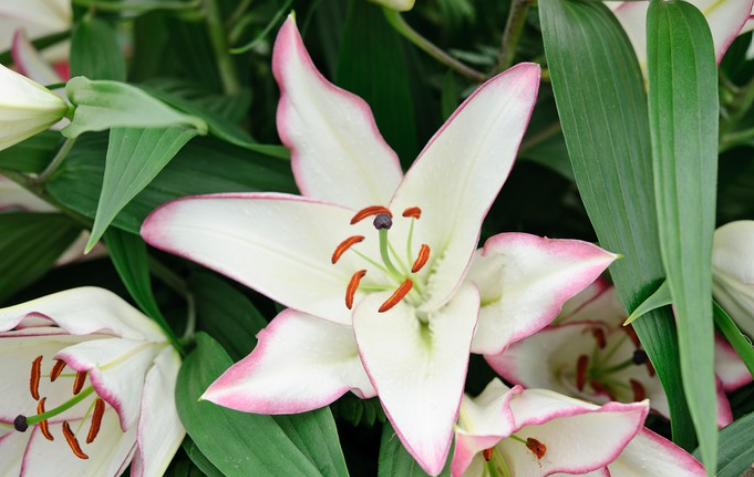
Best Lilies for Shade Gardening
Martagon Lily
Martagon Lily is the wild species behind the entire shade-tolerant Martagon division, producing small, strongly recurved, Turk’s Cap-shaped blooms in shades of dusky purple-pink with darker spotting, arranged in whorls along the stem. Native across a huge range from Portugal to Mongolia and into northern North America, it reaches 2 to 4 feet tall, occasionally up to 6 feet in ideal conditions, and is hardy across USDA zones 3 through 9. Unlike most lilies, it thrives and blooms impressively in partially shaded, woodland-style settings, though it can take a year or two to establish before flowering begins in earnest.
Mrs R.O. Backhouse
Mrs R.O. Backhouse is a vigorous, disease-resistant Martagon hybrid producing bountiful 2-inch orange-yellow blooms delicately flushed with pink, mostly facing downward in dramatic Turk’s Cap fashion. Growing 3 to 5 feet tall on slender stems clad in whorled leaves, it performs best in full sun or part shade and returns reliably year after year once established. Its striking color and disease resistance have made it one of the most popular named Martagon cultivars for woodland borders.
Claude Shride
Claude Shride is a striking Martagon hybrid with deep, dark red, strongly recurved petals held on tall, willowy stems that can reach 4 to 5 feet in the right conditions. Like other Martagon types, it prefers light, dappled shade and can take 2 to 3 years to fully establish before reaching its best flowering performance. Once settled, Claude Shride produces multiple down-facing, richly colored blooms per stem and is considered one of the more reliably vigorous cultivars within its division.
Common Martagon Album
Common Martagon Album is a pure white-flowered form of the wild Martagon species, offering the same strongly recurved, Turk’s Cap bloom shape without the darker spotting found on the standard species. It shares the same partial-shade preference and 3 to 4 foot height typical of its division, brightening a shaded woodland border with clean, unmarked petals rather than the moodier purple-pink tones of its relatives. Like other Martagons, it spreads gradually into a fuller clump over time.
Henry’s Lily
Henry’s Lily is a vigorous species native to China, producing bright orange, strongly recurved blooms with dark speckling on tall stems that can reach 6 to 8 feet under favorable conditions. It tolerates partial shade better than most species lilies, particularly in hot climates where afternoon shade helps protect its blooms from scorching, and it flowers in late summer, later than most other shade-tolerant types. Henry’s Lily has also been used as a parent species in developing several Aurelian hybrid lines.
Canada Lily
Canada Lily is a native North American species producing bell-shaped, nodding blooms in shades from pale yellow to orange-red with light speckling, held on graceful stems reaching 3 to 5 feet tall. It flowers in early to midsummer, favoring the dappled light of open woodland edges and moist meadows across the eastern United States and Canada. This species has a long history of cultivation for its delicate, naturalistic appearance in shaded and partially shaded garden settings.
Michigan Lily
Michigan Lily is a native species with nodding, strongly recurved orange-yellow blooms speckled with maroon spots, closely related to other native Turk’s Cap-type lilies found across the eastern and central United States. It reaches 3 to 5 feet tall, flowering in mid to late summer along woodland edges and moist prairies where it receives protection from the harshest afternoon sun. Its slender, whorled foliage gives it a graceful, airy presence well suited to naturalized shade plantings.
American Turk’s Cap Lily
American Turk’s Cap Lily, also called the Swamp Lily, is a native species that thrives in the damp, partially shaded conditions common along stream banks and wetland edges, producing large, deep orange blooms with dark spotting and a distinctive green star at the center. It typically reaches 3 to 6 feet tall and can produce up to 50 nodding blooms on a single mature stem, making it one of the most floriferous shade-tolerant lily species available.
Japanese Turk’s Cap Lily
Japanese Turk’s Cap Lily is a vigorous, erect species producing racemes of up to 12 small, fragrant, bright yellow-orange blooms in early summer, held above narrow, glossy foliage. Its compact clusters of recurved flowers thrive in the light shade of a woodland garden, and it performs particularly well when naturalized alongside ferns and hostas, plants that share its preference for moist, humus-rich soil.
Nodding Lily
Nodding Lily is a species type with a strongly downward-drooping habit, its delicate lilac petals arching upward into a distinctive cap-like shape flecked with orange. Its strong fragrance combined with genuine tolerance for partial shade makes it an excellent choice for woodland edges and beneath tree canopies, where it typically performs better than in full, unfiltered sun.
Wood Lily
Wood Lily, also known as the Philadelphia Lily, produces upward-facing, star-shaped blooms with red-orange petals fanning outward from a yellow, brown-speckled center. It stays relatively short, generally 1 to 3 feet tall, and while it flowers most heavily in full sun, it tolerates light, filtered shade reasonably well in cooler climates, flowering from midsummer into August.
Early Bird Martagon Hybrids
Early Bird Martagon Hybrids are a strain of Dutch-bred Martagon crosses developed for improved vigor and earlier establishment than older heirloom Martagon cultivars, typically reaching flowering size within just 2 years rather than the 3 or more years common among wild-collected types. Blooms come in a range of spotted colors from soft yellow to deep burgundy, all in the classic downward-facing Turk’s Cap form, and the plants reach 3 to 5 feet tall in the same partial shade conditions favored by their Martagon relatives.
Trout Lily
Trout Lily, the common name for Erythronium, is a true woodland ephemeral producing small, nodding, lily-shaped blooms in yellow, white, or pink above mottled, trout-skin-patterned leaves. It stays low, typically just 4 to 8 inches tall, and blooms in early spring before deciduous trees leaf out, making it one of the earliest and most deeply shade-tolerant plants on this list, well suited to a naturalized woodland floor.
Toad Lily
Toad Lily, the common name for Tricyrtis, produces small but intricately patterned purple blooms speckled with darker maroon spotting, giving each flower a delicate, orchid-like appearance despite the plant’s unassuming name. It typically reaches 1 to 3 feet tall and flowers in late summer into fall, thriving in full to partial shade where its unusual coloring can be appreciated up close along a woodland path.
Plantain Lily
Plantain Lily, the common name for many Hosta varieties, produces tall, slender flower spikes topped with clusters of lavender to white, trumpet-shaped blooms rising above the plant’s signature broad, textured foliage. While primarily grown for its leaves rather than its blooms, Plantain Lily tolerates deep shade better than almost any plant on this list, making it an essential foundation for a layered shade garden.
Lily of the Valley
Lily of the Valley is a low-growing, deeply shade-tolerant perennial producing small, bell-shaped white blooms with an intensely sweet fragrance, arranged along arching stems just 6 to 12 inches tall. It spreads readily by underground rhizomes to form a dense groundcover beneath trees and shrubs, flowering in mid to late spring, and remains one of the most fragrant options available for a heavily shaded bed.
Corn Lily
Corn Lily, also known as Bead Lily, is a true woodland species producing small, star-shaped white blooms followed by striking blue berries, held above broad, glossy, corn-like foliage close to the ground. It typically reaches just 6 to 12 inches tall and requires consistently moist, acidic, humus-rich soil in full to partial shade, making it a specialty choice for cool, moist woodland gardens rather than typical dry shade.
Surprise Lily
Surprise Lily, also called the Naked Lady, produces tall, leafless flower stalks topped with clusters of pink, trumpet-shaped blooms that emerge suddenly in late summer, well after the plant’s strap-like foliage has died back earlier in the season. It typically reaches 18 to 24 inches tall and tolerates partial shade well, making it a striking, unexpected addition to a woodland-edge planting.
Ginger Lily
Ginger Lily, the common name for several Hedychium species, produces tall spikes of fragrant, orchid-like blooms in shades of white, yellow, or orange above broad, tropical-looking foliage. It typically reaches 4 to 6 feet tall and tolerates partial shade particularly well in hot climates, where some afternoon protection helps prevent its large leaves from scorching, flowering in late summer into fall.
African Lily
African Lily, more formally known as Agapanthus and sometimes called Lily of the Nile, produces tall, elegant flower stalks topped with rounded clusters of trumpet-shaped violet-blue blooms. While it flowers most heavily in full sun, many cultivars perform reasonably well in partial shade, particularly in warmer climates, typically reaching 2 to 4 feet tall and flowering in mid to late summer.
Peace Lily
Peace Lily, the common name for Spathiphyllum, is one of the most deeply shade-tolerant plants carrying the lily name, producing elegant white, hooded blooms above glossy, dark green foliage. Though typically grown as a houseplant in temperate climates, it thrives outdoors year-round in shaded, frost-free regions, reaching 1 to 4 feet tall depending on the variety, and tolerates far lower light levels than almost any true lily.