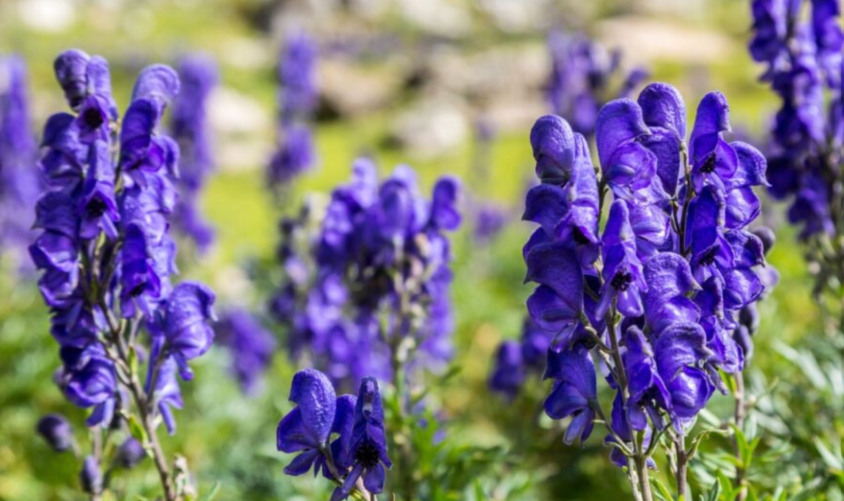
Dark purple perennial flowers add depth, richness, and a sense of elegance to garden spaces. Their intense tones create a dramatic contrast against lighter colors and green foliage.
These flowers often symbolize luxury, mystery, and calm, making them popular in both formal and relaxed garden designs. Their bold color naturally draws the eye without overwhelming the landscape.
They work well as focal points, border accents, or background plantings. When grouped together, they create a striking visual mass that enhances garden structure.
Many of these perennials also attract pollinators like bees and butterflies, bringing movement and ecological value to the space. Their blooms can support biodiversity while adding beauty.
Most thrive in well-drained soil with adequate sunlight and benefit from occasional care. With the right conditions, they return year after year, providing reliable color and impact.
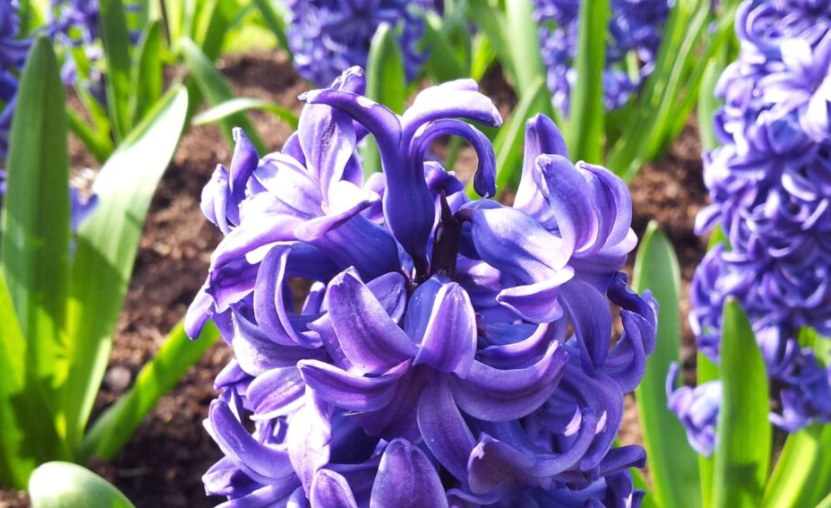
Dark Purple Perennial Flowers
Salvia nemorosa ‘Caradonna’ (Woodland Sage)
One of the most elegant of all purple perennials, ‘Caradonna’ produces tall, slender spikes of deep violet-purple flowers on striking near-black stems from late spring through summer. It is exceptionally attractive to bees and butterflies, thrives in full sun and well-drained soil, and rewards hard cutting back after the first flush with a generous second wave of blooms.
Allium ‘Purple Sensation’ (Ornamental Onion)
This spectacular ornamental onion produces perfectly spherical, football-sized flowerheads of the most intensely rich, deep violet-purple imaginable, held aloft on tall, straight stems in late spring and early summer. Rising above dying foliage that is best disguised by neighbouring plants, the bold drumstick heads remain attractive even as they fade and dry, and associate magnificently with golden grasses and silver-leaved companions.
Iris germanica ‘Superstition’ (Bearded Iris)
‘Superstition’ is widely regarded as one of the darkest and most dramatic of all bearded irises, bearing enormous, ruffled flowers of an almost black-purple that seem to absorb light rather than reflect it. The velvety, opulent blooms appear in late spring on tall, upright stems above fans of grey-green sword-shaped leaves, and their subtle fragrance adds a further dimension to an already extraordinary floral display.
Geranium ‘Rozanne’ (Hardy Cranesbill)
While ‘Rozanne’ produces flowers in a soft violet-blue, its close relative Geranium ‘Purple Pillow’ and other deeply coloured forms offer genuinely dark, rich purple blooms over an exceptionally long season from early summer right through to the first frosts. Hardy geraniums are invaluable ground-covering perennials that smother weeds effectively, tolerate a wide range of conditions, and ask for very little care in return for their generous, long-lasting floral display.
Baptisia australis (False Indigo)
False indigo is a long-lived, deeply rooted North American prairie perennial that produces tall, lupine-like spikes of deep indigo-purple flowers in late spring, followed by attractive, inflated seed pods that rattle in the breeze and provide winter interest. It is a slow-establishing plant that resents disturbance once planted, but rewards patience with a magnificent, self-sufficient clump that improves in beauty and stature with every passing year.
Delphinium ‘Black Knight’ (Larkspur)
‘Black Knight’ is one of the most intensely coloured of all delphiniums, bearing towering spikes of deep violet to near-black-purple flowers with a distinctive dark central eye or “bee” at the heart of each bloom. These stately, aristocratic perennials are the undisputed monarchs of the classic English cottage garden border, demanding rich soil, full sun, and careful staking but repaying the effort with a floral display of breathtaking grandeur in early summer.
Verbena bonariensis (Tall Verbena)
Tall verbena is a wispy, airy perennial from South America that produces small but intensely vivid purple-violet flower clusters at the branching tips of tall, wiry, near-transparent stems, creating a haze of colour that floats magically above other planting. It is a prolific self-seeder that maintains a persistent and welcome presence throughout the garden once established, and its open flower structure makes it one of the most accessible nectar sources for butterflies and other pollinators.
Echinacea purpurea ‘Magnus’ (Purple Coneflower)
‘Magnus’ is a robust, award-winning coneflower cultivar bearing large, flat, rich rose-purple ray petals surrounding a prominent, spiky, bronze-orange central cone, creating a flower of bold, cheerful character that blooms prolifically from midsummer through autumn. It is an outstanding wildlife plant, attracting butterflies and bees to its nectar while the seed-filled cones provide food for goldfinches and other seed-eating birds through autumn and winter.
Agastache ‘Black Adder’ (Giant Hyssop)
‘Black Adder’ is a striking, aromatic perennial hyssop bearing long, dense spikes of deep violet-purple tubular flowers on upright stems from midsummer through to autumn. The flowers are packed with nectar and are irresistible to bumblebees, honey bees, and butterflies, making this one of the most ecologically valuable perennials available to gardeners. The anise-scented foliage remains attractive throughout the season and the plant is remarkably drought tolerant once established.
Aconitum napellus (Monkshood)
Monkshood is a stately, deeply atmospheric perennial bearing tall, architectural spikes of hooded, helmet-shaped flowers in a rich, deep violet-blue to purple-black shade in mid to late summer. It thrives in partial shade and moist, fertile soils where few other bold-flowered perennials perform as well, making it invaluable for bringing dramatic colour to shadier parts of the garden. Every part of the plant is extremely toxic, and care should be taken when handling it, always wearing gloves.
Penstemon ‘Raven’ (Dark Beardtongue)
‘Raven’ is one of the deepest-coloured penstemons available, producing tubular, foxglove-like flowers of an intense, near-black-purple on upright stems over a remarkably long flowering period from early summer through to autumn. Semi-evergreen in mild winters, it forms a compact, well-behaved clump and is particularly effective when planted in bold drifts or used as a rich, dark backdrop for silver-leaved and pale-flowered companions.
Lavandula stoechas (French Lavender)
French lavender is a compact, aromatic Mediterranean sub-shrub bearing short, dense, rounded spikes of dark, almost black-purple flowers topped with distinctive, rabbit-ear-like purple bracts that flutter attractively in the breeze. It blooms earlier and more flamboyantly than common lavender, though it is less cold-hardy, and in mild, sheltered gardens it can flower for an extraordinarily long season from spring through to autumn with appropriate deadheading.
Nepeta ‘Six Hills Giant’ (Catmint)
‘Six Hills Giant’ is a large, vigorous, mounding catmint producing long, arching stems smothered in tiny, two-lipped flowers of a rich violet-purple from late spring through summer, creating a wonderfully soft, billowing mass of colour and fragrance. It is among the most bee-friendly plants in cultivation and the aromatic, grey-green foliage is highly fragrant when brushed against, releasing a sharp, clean, minty scent that many people find one of the most refreshing in the garden.
Stokesia laevis ‘Purple Parasols’ (Stokes’ Aster)
‘Purple Parasols’ is a refined, clump-forming perennial from the southeastern United States bearing large, intricate, cornflower-like blooms in a rich violet-purple shade from midsummer through to early autumn. The flowers have a beautifully fringed, lacy quality that gives them an almost exotic appearance, and they sit attractively above rosettes of smooth, dark green strap-shaped leaves. This cultivar is particularly free-flowering and reliable, performing well in well-drained soils in full sun.
Astrantia ‘Star of Billion’ (Masterwort — Dark Forms)
The darkest astrantia cultivars produce intricate, pincushion-like flowerheads in deep wine-purple and near-black shades, each surrounded by a collar of pointed, papery bracts that give the flower a star-like, jewel-box quality of extraordinary refinement. These elegant woodland-edge perennials thrive in moist, humus-rich soils in partial shade and are popular with flower arrangers who prize the long-lasting blooms for their delicate architectural character and unusual, sombre colour.
Thalictrum ‘Splendide’ (Meadow Rue)
Tall meadow rues are ethereal, graceful perennials producing clouds of tiny, fluffy, purple flowers on tall, purple-flushed stems above lacy, blue-green, columbine-like foliage in early to midsummer. The flowers, though individually tiny, collectively create an impressionistic haze of colour of great beauty and lightness, and the plant combines magnificently with bolder companions whose flowers benefit from this soft purple background. It thrives in moist, fertile soils with some shelter from strong winds.
Salvia × sylvestris ‘Mainacht’ (May Night Sage)
‘Mainacht’, or May Night, is a classic garden perennial producing dense, upright spikes of deep indigo-violet flowers on near-black stems from late spring through early summer, earning it one of the most prestigious awards in horticulture, the RHS Award of Garden Merit. The spikes are carried in impressive profusion above compact clumps of wrinkled, grey-green aromatic foliage, and the plant reliably produces a second and often third flush of flowers if cut back promptly after each blooming period.
Phlox paniculata ‘Nicky’ (Garden Phlox)
‘Nicky’ is one of the deepest-coloured of all garden phlox cultivars, producing large, domed panicles of intensely fragrant, rich magenta-purple flowers in midsummer above strong, upright stems and glossy, dark green foliage. The heady fragrance carried on warm summer evenings is among the most evocative of all garden scents, reminiscent of high summer and traditional cottage gardens. Good air circulation around the plants helps prevent the powdery mildew to which phlox can be susceptible.
Veronicastrum virginicum ‘Fascination’ (Culver’s Root)
‘Fascination’ is a stately, architectural perennial from North America producing tall, tapering, candelabra-like spikes of tiny, soft lilac-purple flowers on imposing, near-vertical stems in midsummer. The whorled, lance-shaped leaves arranged in tiers along the stems give the plant a beautifully structured appearance even before the flowers open, and the overall effect in the border is one of elegant, upright grandeur. It thrives in moist, fertile soils and is particularly effective at the back of large borders.
Hemerocallis ‘Raspberry Beret’ (Dark Daylily)
Among the deepest-coloured of all daylily cultivars, the richly pigmented purple-violet forms bear large, trumpet-shaped blooms of velvety, dramatic intensity that make a powerful statement in the summer border. Though each individual flower lasts only a single day, daylilies produce an abundance of buds that maintain the display over many weeks, and modern reblooming cultivars extend the season even further. They are extremely adaptable, tolerating a wide range of soil types and conditions with ease.
Scabiosa ‘Ace of Spades’ (Pincushion Flower)
‘Ace of Spades’ is a compact, long-flowering scabiosa producing domed, pincushion-like flowers of a remarkably deep, rich violet-purple on slender, wiry stems from early summer right through to autumn. Each flower head has a delicate, lacy appearance with protruding white stamens that create an intricate, jewelled effect, and the plant is very attractive to butterflies and bees who appreciate its accessible, nectar-rich flowers. It thrives in alkaline to neutral, well-drained soils in full sun.
Liatris spicata (Blazing Star / Gayfeather)
Blazing star is a distinctive North American prairie perennial bearing tall, poker-like spikes of densely packed, deep purple-violet flowers that open from the top of the spike downward — the reverse of most spiked flowers — from midsummer through late summer. The vertical, brush-like form of the flower spikes gives a strong architectural quality to prairie and naturalistic planting schemes, and the flowers are exceptionally attractive to monarch butterflies, bees, and hummingbirds.
Eryngium planum ‘Blaukappe’ (Sea Holly)
‘Blaukappe’ is a steely, architectural perennial sea holly bearing small, cylindrical, thistle-like flowerheads of an intense metallic blue-purple, surrounded by spiny, iridescent bracts of similar colour on branching, steel-blue stems from midsummer through autumn. The whole plant has a striking, other-worldly quality as if fashioned from polished metal, and it dries beautifully for winter arrangements. It demands full sun and excellent drainage, performing best in poor, dry soils where more vigorous plants cannot compete.
Polemonium caeruleum (Jacob’s Ladder)
Jacob’s ladder is an elegant, clump-forming perennial producing loose clusters of cup-shaped, deep violet-blue to rich purple flowers above attractive, ladder-like pinnate foliage from late spring through early summer. The flowers have a simple, wildflower charm that sits naturally in cottage gardens, woodland edges, and naturalistic planting schemes, and the distinctive foliage remains ornamental long after the flowering season has ended. It thrives in moist, fertile soils with partial shade or full sun in cooler climates.
Tradescantia ‘Concord Grape’ (Spiderwort)
‘Concord Grape’ is a richly coloured spiderwort cultivar bearing three-petalled flowers of a deep, grape-purple shade with prominent golden stamens that provide a striking colour contrast at the heart of each bloom. Flowering from late spring through summer and again in autumn if cut back after the first flush, it forms spreading clumps of strap-like, arching, grey-green foliage that maintain ground-covering interest throughout the season. It tolerates partial shade and moist soils better than many purple perennials.
Campanula glomerata ‘Superba’ (Clustered Bellflower)
‘Superba’ is a vigorous, bold bellflower bearing tight, domed clusters of large, upward-facing, funnel-shaped flowers of a rich, deep violet-purple at the tips of upright stems in early to midsummer. The flowers are an outstanding nectar source for bees, and the plant spreads enthusiastically by underground runners to form a substantial, weed-suppressing colony over time. It performs well in a range of soils and conditions, tolerating partial shade with only a modest reduction in flowering performance.
Knautia macedonica (Macedonian Scabious)
This enchanting, long-flowering perennial from the Balkans produces a continuous succession of small, domed, pincushion flowerheads in a rich, deep claret-purple on slender, branching stems from early summer right through to the first frosts. It self-seeds freely and mingles charmingly with ornamental grasses and other airy perennials in naturalistic border schemes, creating an informal, meadow-like quality. The nectar-rich flowers are highly attractive to butterflies and are excellent for cutting.
Iris sibirica ‘Caesar’s Brother’ (Siberian Iris)
‘Caesar’s Brother’ is one of the finest and most enduring of all Siberian iris cultivars, bearing elegant, deep blue-violet to near-purple flowers of classic iris form on tall, slender stems above graceful, grass-like foliage in late spring and early summer. Unlike the more demanding bearded irises, Siberian irises are easy, adaptable, and long-lived, thriving in moist to moderately dry soils and tolerating both full sun and partial shade, while their handsome, upright foliage remains a valuable structural asset in the border throughout the entire growing season.