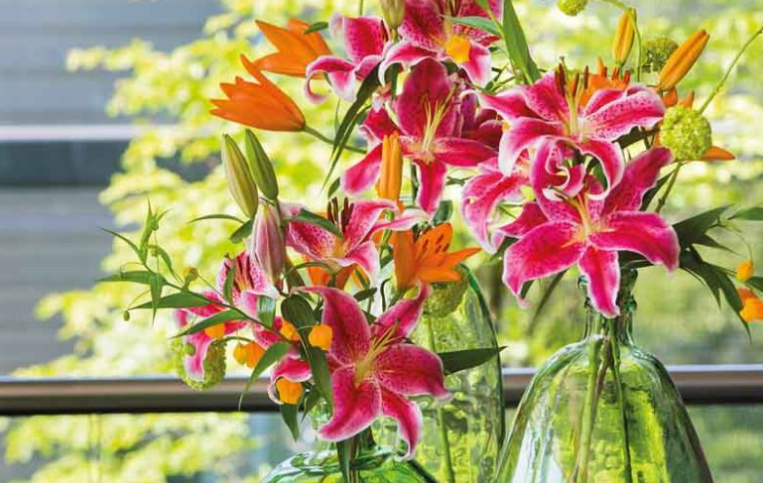
Lilies are elegant flowering plants known for their large, trumpet-shaped blooms and often strong fragrance. Belonging to the genus Lilium, they grow from bulbs and return year after year, making them popular perennials in many gardens. Their petals can be smooth or recurved, and they typically stand tall on upright stems.
These plants come in a wide range of colors, including white, pink, orange, yellow, and deep red. Some varieties display striking patterns like spots or contrasting centers, which add visual interest. Their blooms usually appear in late spring to summer, depending on the type and climate.
Lilies thrive in well-drained soil and prefer full sun or partial shade. They are relatively easy to grow if given proper conditions, such as moderate watering and protection from strong winds. Gardeners value them for their reliability and the dramatic effect they create when in bloom.
In landscaping, lilies are often used as focal points due to their height and bold flowers. They can be planted in clusters or drifts to create eye-catching displays in flower beds and borders. Their vertical growth helps add structure and layers to garden designs.
They also work well when mixed with other perennials and shrubs, providing contrast in both form and color. Shorter plants can be placed in front of them to highlight their tall stems, while their blooms can complement a wide variety of garden styles, from formal to cottage gardens.
Additionally, lilies are suitable for container gardening, making them a versatile choice for patios, balconies, and small spaces. Their cut flowers are long-lasting, so they are also frequently used in floral arrangements, bringing their beauty from the garden into indoor spaces.
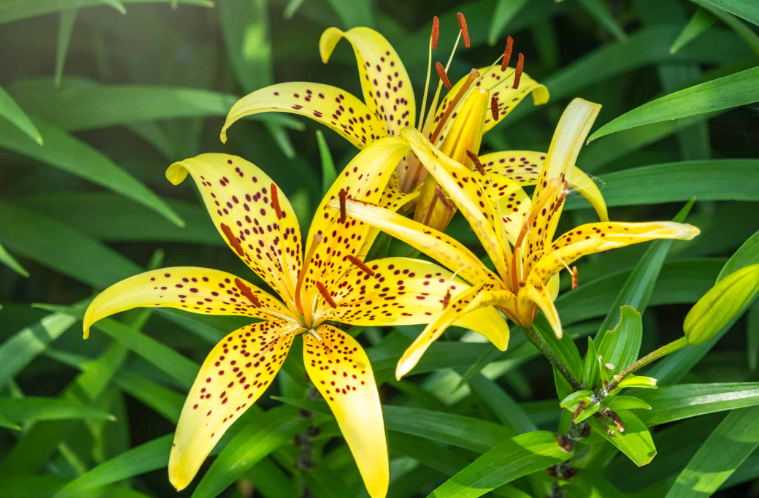
Lilies that Bloom All Summer
Daylily (Hemerocallis spp.)
One of the most reliable summer bloomers, daylilies produce a continuous parade of trumpet-shaped flowers from early to late summer. Each bloom lasts just one day, but the plants produce so many buds that the display goes on for weeks. They thrive in full sun and are remarkably drought-tolerant once established.
Asiatic Lily (Lilium Asiatic hybrids)
Asiatic lilies are among the earliest lilies to bloom and among the easiest to grow. They come in a dazzling range of colors — from white and yellow to deep red and purple — and their upward-facing flowers make them excellent for cutting gardens. They prefer well-drained soil and full sun.
Oriental Lily (Lilium Oriental hybrids)
Known for their intoxicating fragrance and large, showy blooms, Oriental lilies are the queens of the summer garden. They typically bloom in mid-to-late summer and come in shades of white, pink, and crimson, often with spotted or striped petals. They prefer slightly acidic soil and do best with afternoon shade in hot climates.
Trumpet Lily (Lilium Trumpet hybrids)
Trumpet lilies live up to their name with long, elegant, trumpet-shaped flowers that face outward or slightly downward. They bloom in mid-summer and carry a sweet, powerful fragrance that fills the garden. Growing quite tall — sometimes over five feet — they make a bold architectural statement.
Tiger Lily (Lilium lancifolium)
The tiger lily is instantly recognizable with its vivid orange petals dramatically spotted with black. It blooms in mid-to-late summer and is one of the most vigorous and self-sufficient lilies you can grow. It naturalizes readily and is a tough, long-lived presence in cottage and wildflower gardens.
Stargazer Lily (Lilium ‘Stargazer’)
A beloved Oriental hybrid, the Stargazer lily produces large, upward-facing blooms in rich crimson-pink with white edges and dark spotting. It blooms in mid-summer and its powerful, sweet fragrance is legendary. It is one of the most popular cut flowers in the world and performs beautifully in containers.
Canada Lily (Lilium canadense)
Native to eastern North America, the Canada lily features gracefully nodding, bell-shaped flowers in yellow, orange, or red with spotted interiors. It blooms in early-to-mid summer and thrives in moist, woodland-edge conditions, making it ideal for naturalizing along streams or pond margins.
Easter Lily (Lilium longiflorum)
While traditionally associated with spring, Easter lilies planted outdoors will re-bloom in summer and continue for years. Their pure white, fragrant trumpets are elegantly simple and highly refined. They prefer full sun to light shade and well-drained, fertile soil.
Martagon Lily (Lilium martagon)
Also called the Turk’s cap lily, the martagon is a European native prized for its nodding, reflexed flowers in shades of pink, purple, white, and deep maroon. It blooms in early summer and is notably tolerant of shade and dry conditions, thriving where other lilies struggle.
LA Hybrid Lily (Longiflorum × Asiatic hybrids)
LA hybrids combine the large blooms and mild fragrance of Longiflorum lilies with the hardiness and wide color range of Asiatics. They bloom prolifically from early to mid-summer and are exceptionally versatile — thriving in garden beds as well as containers. Their strong stems make them superb cut flowers.
OT Lily / Orienpet (Oriental × Trumpet hybrids)
Orienpet lilies, or OT hybrids, are the giants of the lily world — often reaching six to eight feet tall with blooms the size of dinner plates. They bloom in mid-to-late summer and combine the fragrance of Oriental lilies with the sun tolerance and vigor of Trumpets. They are truly showstopping in the back of a border.
Formosan Lily (Lilium formosanum)
Native to Taiwan, the Formosan lily produces slender, white trumpet flowers flushed with purple on the outside. It blooms from mid-summer into autumn, making it one of the longest-blooming lilies available. It grows quickly from seed and is particularly suited to warm, humid climates.
Leopard Lily (Lilium pardalinum)
This striking western North American native features pendant, reflexed flowers in fiery orange and red, heavily spotted with maroon — resembling a leopard’s coat. It blooms in early to mid-summer, spreads naturally via rhizomes, and thrives in moist, partly shaded spots near water.
Golden-rayed Lily (Lilium auratum)
Native to Japan, the golden-rayed lily is considered one of the most magnificent of all lilies. Its enormous white flowers are marked with gold bands and crimson spots and carry an exceptional fragrance. It blooms in late summer and prefers cool, moist, well-drained, acidic soil.
Henry’s Lily (Lilium henryi)
A vigorous Chinese species, Henry’s lily produces masses of apricot-orange, reflexed blooms on tall, arching stems in mid-to-late summer. It is one of the most adaptable and long-lived lilies, tolerating alkaline soils and light shade better than most. It can produce up to 20 flowers per stem.
Philippine Lily (Lilium philippinense)
This delicate species from the Philippines bears long, narrow, white trumpet flowers with a soft greenish tinge and a sweet fragrance. It blooms in mid-summer and prefers warm, well-drained conditions. It is a lovely, understated lily that brings elegance rather than drama to the garden.
Regale Lily (Lilium regale)
The regal lily is a classic cottage garden plant, producing large white trumpets flushed with rose-purple on the outside and golden yellow at the throat. It blooms in early-to-mid summer and carries one of the most beloved fragrances of any garden plant. It is easy to grow and multiplies reliably.
Madonna Lily (Lilium candidum)
One of the oldest cultivated plants in the world, the Madonna lily has been cherished for over 3,000 years. Its pure white, sweetly scented flowers bloom in early summer on stately, upright stems. Unlike most lilies, it prefers alkaline, well-drained soil and should be planted shallowly in late summer.
Turk’s Cap Lily (Lilium superbum)
A majestic North American native, the Turk’s cap lily can grow over eight feet tall and produce dozens of deep orange, reflexed flowers spotted with purple-brown. It blooms in mid-to-late summer and prefers moist, rich, acidic soil, making it spectacular planted in masses at the edge of woodland gardens.
Coral Lily (Lilium pumilum)
Also known as the coral or scarlet lily, this dainty Siberian species produces small, brilliant red, nodding flowers on slender stems in early summer. It is one of the smallest true lilies and is perfect for the front of borders or rock gardens. It is short-lived but self-seeds freely to maintain its presence.
Calla Lily (Zantedeschia aethiopica)
Though not a true lily botanically, the calla lily is universally embraced as one. It produces its iconic, funnel-shaped spathes in white, yellow, pink, and deep purple throughout summer, especially in moist conditions. Originally from southern Africa, it thrives in water garden margins, containers, and shaded borders, bringing a sophisticated, sculptural beauty to any setting.